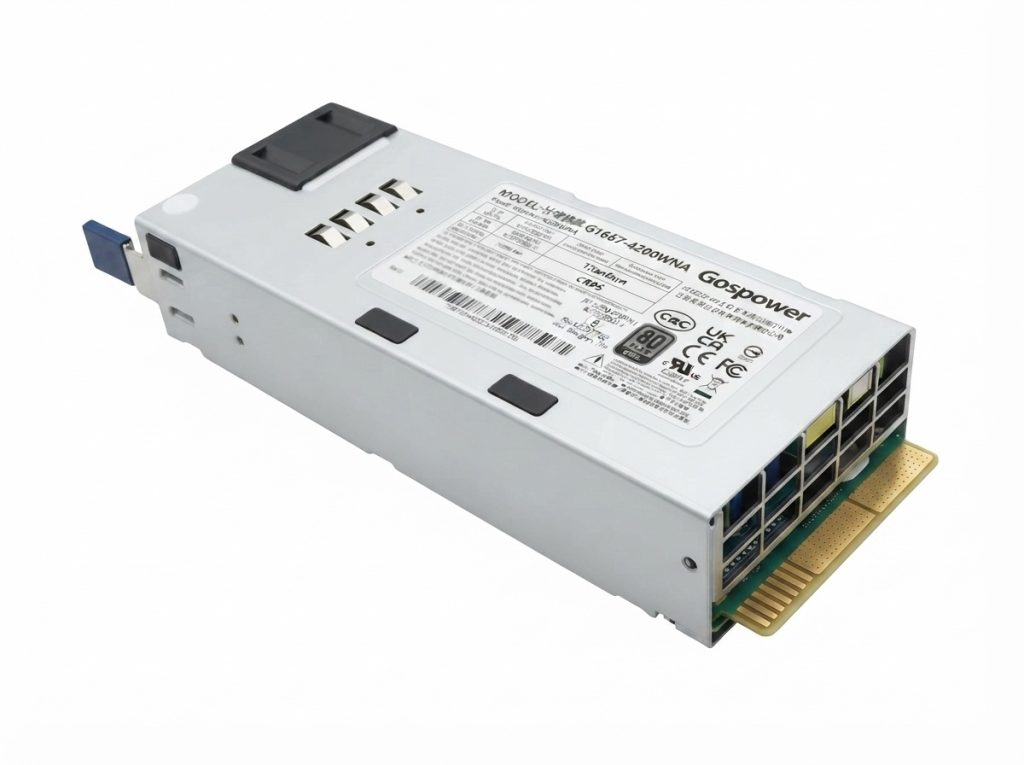
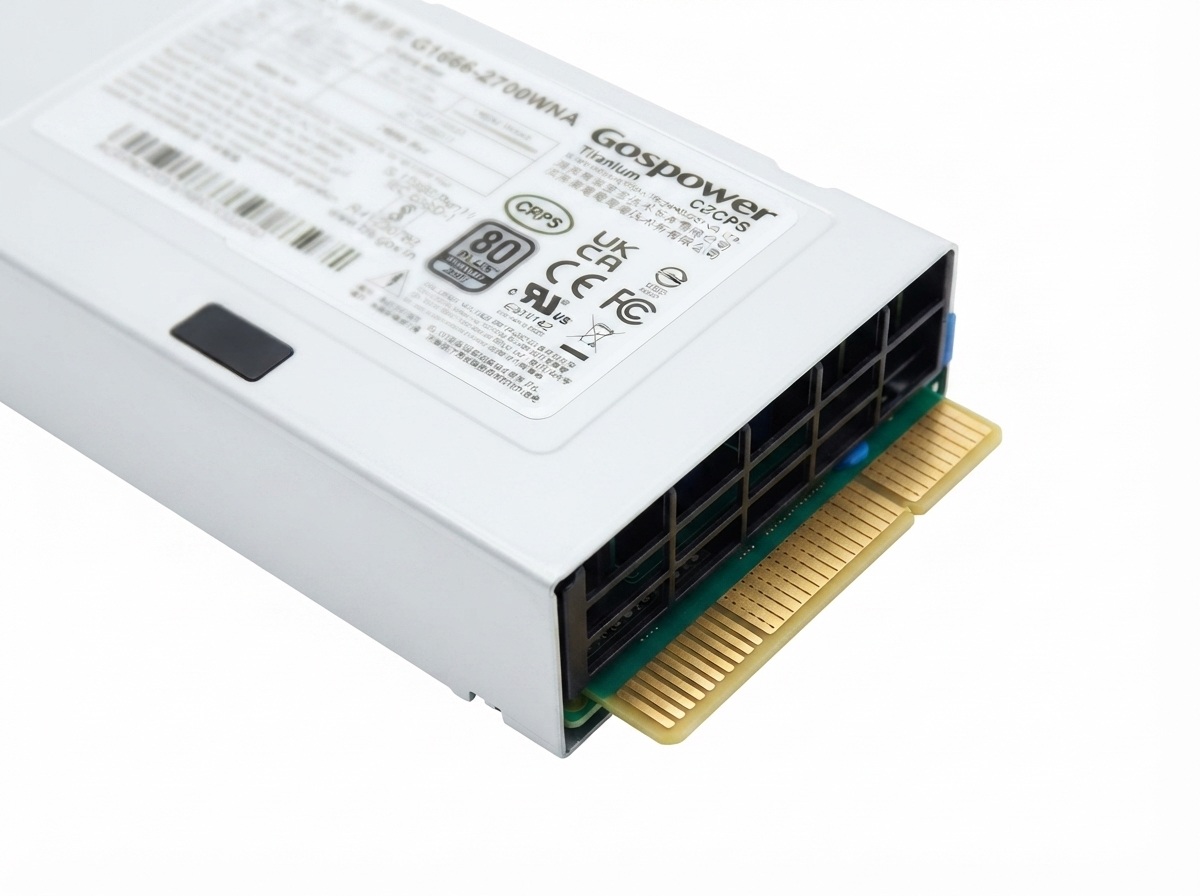
G1666

INQUIRY READY

G1666-3200WNA

Gospower / AC/DC Titanium / G1666

G1666-3200WNA was developed around the needs of Hyperscale Compute Nodes, AI Training Servers, Multi-Tenant Data Platforms, and Distributed Al & Edge Clusters. Its combination of 3200W capacity provides reliable integration in space-conscious equipment.

Output Power (W):
3200
Length (mm):
185
Width (mm):
73.5
Height (mm):
40

Need compatibility confirmation? Send us your model, label photo, power rating, and connector requirements.

PRODUCT OVERVIEW

Built for reliable, continuous power delivery.

The G1666-3200WNA is suitable for high-density infrastructure where power demand changes quickly across GPUs, CPUs, storage, networking, and management subsystems. Its 3200W output makes it a strong fit for hyperscale compute nodes, AI training servers, multi-tenant data platforms, HPC workloads, and distributed compute clusters where high current capacity, cooling control, and remote visibility are essential. Commissioning should verify grounding, input protection, output stability, and the response of any redundant or hot-swap control logic. Qualification should include airflow direction, thermal margin, cable routing, and access for routine module replacement.

Before integrating the G1666-3200WNA, confirm the mating connector or backplane, input source, output-rail requirements, hot-swap sequence, airflow direction, monitoring interface, redundancy behavior, and service clearance against the target platform.
CORE ADVANTAGES

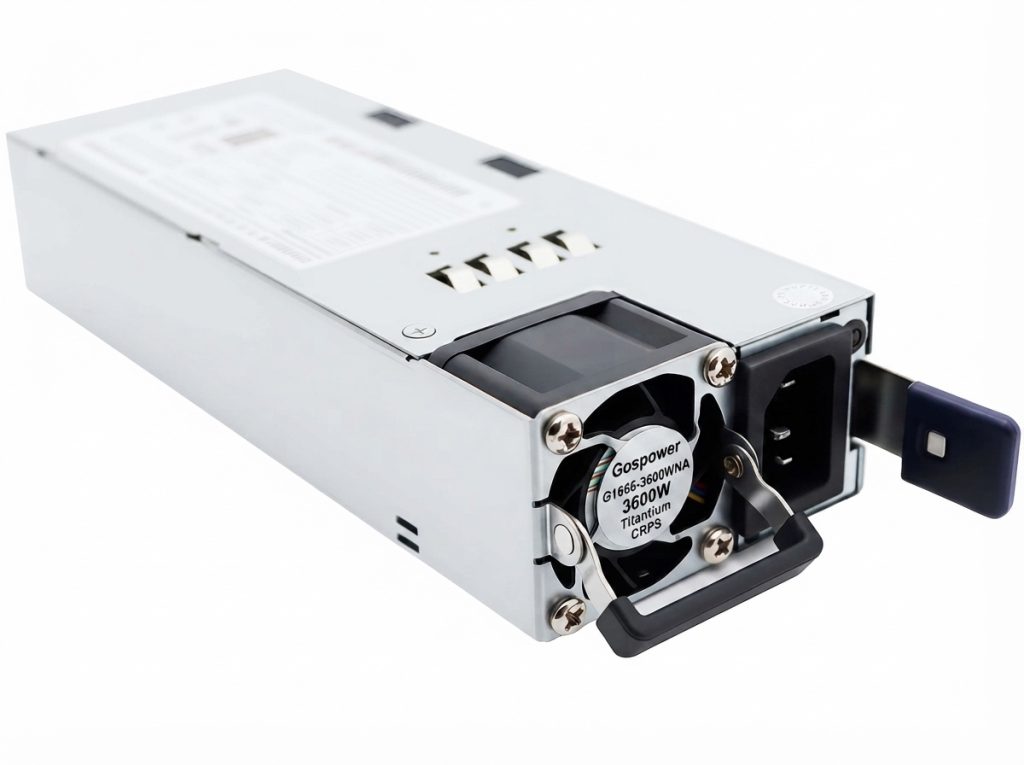
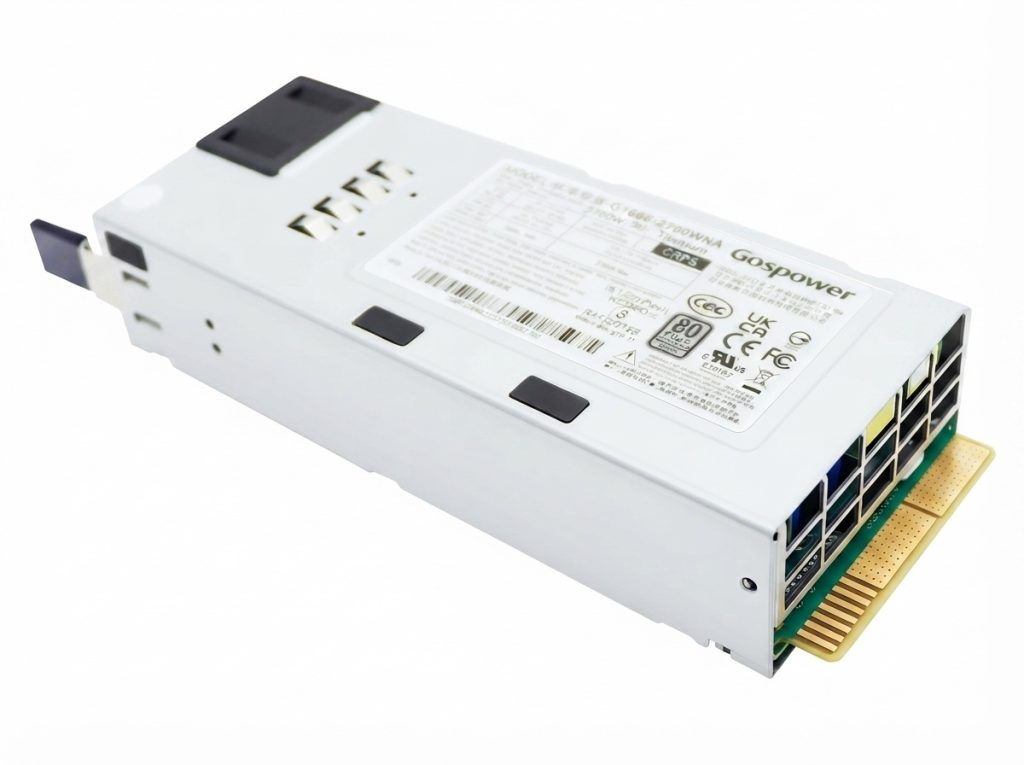
3200W CRPS Power Supply for Hyperscale Compute Nodes, AI Training Servers, and Multi-Tenant Data Platforms

3200W Power for Hyperscale Infrastructure The G1666-3200WNA is designed for hyperscale compute nodes, AI training servers, multi-tenant data platforms, HPC workloads, and mid-scale LLM compute environments that require strong 3200W power delivery in a compact CRPS module.

01

3200W Power for Hyperscale Infrastructure The G1666-3200WNA is designed for hyperscale compute nodes, AI training servers, multi-tenant data platforms, HPC workloads, and mid-scale LLM compute environments that require strong 3200W power delivery in a compact CRPS module.

02

Compact 1U CRPS Mechanical Design With a 185 × 73.5 × 40 mm form factor, this model supports dense GPU server chassis, modular compute racks, cloud infrastructure platforms, and high-density systems where power density and space efficiency are critical.

03

Wide AC and DC Input Compatibility It supports 90–264Vac AC input and 180–300Vdc DC input, allowing flexible deployment across hyperscale data centers, AI server rooms, cloud facilities, enterprise racks, and mixed AC/DC power environments.

04

High-Current 12V Main Output The unit provides a regulated 12V main output at 266.6A together with a 12V standby output at 2.1A, supporting GPUs, CPUs, memory systems, storage backplanes, switch fabrics, cooling fans, and management circuits.

05

PMBus 1.2 Digital Power Supervision With full digital control and PMBus 1.2 support, the G1666-3200WNA enables compatible systems to monitor telemetry, voltage behavior, fault information, power status, and system-level operating conditions.

06

Built for Dynamic AI and Cloud Workloads Titanium-level efficiency, active PFC, intelligent fan modulation, reverse airflow availability, and major safety and EMC compliance options help this model support stable operation under variable AI, cloud, and distributed compute loads.

MODEL SELECTION

Compare Gospower power options.

Review nearby Gospower models and select the power level, output architecture, efficiency grade, and form factor that best match the target system.

Model Power Output Current Efficiency Form Factor Recommended Use
G1666-2700WNA 2700w 12V Titantium CRPS AI inference clusters and edge GPU platforms
G1666-3200WNA 3200w 12V Titantium CRPS HPC workloads and mid-scale LLM compute nodes
G1666-3600WNA 3600w 12V Titantium CRPS High-end AI clusters and HPC fabric systems
G1667-4200WNA 4200w 12V Titantium CRPS AI training platforms and scalable compute racks
G1667-5200WNA 5200w 12V Titantium CRPS Large-scale AI cores and ultra-dense data center systems

DEPLOYMENT SCENARIOS

Where G1666-3200WNA fits best.

The G1666-3200WNA is suitable for high-density infrastructure where power demand changes quickly across GPUs, CPUs, storage, networking, and management subsystems. Its 3200W output makes it a strong fit for hyperscale compute nodes, AI training servers, multi-tenant data platforms, HPC workloads, and distributed compute clusters where high current capacity, cooling control, and remote visibility are essential.

Scenario System Requirement Why G1666-3200WNA Fits
Hyperscale Compute Nodes Stable power for CPUs, GPUs, memory, storage, fans, and management boards 3200W output provides strong margin for dense rack-scale compute environments
AI Training Servers High-current delivery for accelerators, processors, NVMe storage, and thermal systems 12V output at 266.6A supports sustained accelerator-heavy workloads
Multi-Tenant Data Platforms Balanced power for compute, storage, networking, and workload isolation hardware Strong 12V capacity supports mixed platform demand under variable loads
HPC Workloads Reliable power for high-throughput processing, interconnects, and intensive data movement Compact CRPS design supports dense HPC server architectures
Mid-Scale LLM Compute Nodes Stable output for GPU-assisted model training, inference, and batch processing 3200W capacity supports high-load AI compute without increasing PSU footprint
Distributed Computing Clusters Managed power visibility for multi-node and multi-zone deployment PMBus 1.2 supports telemetry, diagnostics, and remote operating insight

POWER DESIGN

Reliability notes for continuous operation.

The G1666-3200WNA is built for hyperscale, AI, HPC, and multi-tenant infrastructure where high-current 12V delivery, compact CRPS integration, and predictable thermal behavior are critical. Its 3200W rating gives system designers strong operating margin for GPU-heavy processing, cloud workload scaling, and distributed compute environments.

  • 3200W output capacity supports hyperscale compute nodes, AI training servers, HPC workloads, multi-tenant data platforms, and distributed computing clusters.
  • 12V main output at 266.6A supports GPUs, CPUs, memory systems, storage backplanes, switch fabrics, network cards, control boards, and cooling fans.
  • 12V standby output at 2.1A supports management logic, standby operation, monitoring circuits, and auxiliary system control.
  • Titanium-level efficiency helps reduce energy loss and thermal load during sustained high-power operation.
  • Active PFC helps improve input power quality and supports stable operation across different AC power conditions.
  • Wide AC/DC input compatibility allows deployment across hyperscale data centers, AI server rooms, enterprise racks, cloud facilities, and global infrastructure environments.
  • PMBus 1.2 communication provides visibility into telemetry, power status, voltage behavior, fault information, and operating data in supported systems.
  • Intelligent fan modulation and optional reverse airflow support help match different chassis cooling paths in high-density server and compute rack designs.

INSTALLATION

Installation and operating guidance.

Confirm electrical compatibility, thermal clearance, mechanical fit, redundancy requirements, and system load before integration.

Installation / Operation Item Guidance
Load Planning Review GPU count, CPU load, memory configuration, storage expansion, switch fabric power, fan consumption, and standby requirements before deployment
Chassis Fitment Confirm the 185 × 73.5 × 40 mm CRPS size before mechanical integration
Input Connection Use within the supported 90–264Vac or 180–300Vdc input range
Output Compatibility Verify that the target platform is designed for 12V main power input
Standby Power Check Confirm that the platform standby requirement matches the 2.1A 12V standby output
Thermal Margin Leave sufficient airflow clearance for 3200W high-current operation in dense chassis
Airflow Direction Match standard or reverse airflow with the chassis cooling path
Monitoring Setup Use PMBus 1.2 where supported for telemetry, diagnostics, fault alerts, and remote maintenance visibility

FAQ

Frequently asked questions about G1666-3200WNA.

Key answers for specification matching, installation planning, and system integration.

What type of power supply is the G1666-3200WNA?

The G1666-3200WNA is a 3200W CRPS power supply designed for hyperscale compute nodes, AI training servers, multi-tenant data platforms, HPC workloads, and mid-scale LLM compute systems.

What is the size of this model?

This model uses a compact 1U CRPS form factor with a size of 185 × 73.5 × 40 mm, making it suitable for dense GPU server chassis and space-constrained rack systems.

What input voltage range does it support?

The G1666-3200WNA supports 90–264Vac AC input and 180–300Vdc DC input for flexible deployment across different infrastructure power environments.

Does the G1666-3200WNA support PMBus monitoring?

Yes. The unit supports PMBus 1.2, allowing compatible systems to monitor telemetry, power status, voltage behavior, fault information, operating conditions, and remote diagnostic data.

Why is this model suitable for hyperscale compute nodes?

Its 3200W output and 12V main rail rated at 266.6A provide strong power capacity for dense compute nodes with CPUs, GPUs, memory expansion, storage devices, fans, and system management circuits.

How does this PSU support AI training servers?

The high-current 12V output supports accelerator-heavy configurations, including GPUs, processors, NVMe storage, high-speed interconnects, and cooling systems used in sustained AI training workloads.

What makes this model useful for multi-tenant data platforms?

Its high output capacity, PMBus visibility, compact CRPS structure, and wide input compatibility help support mixed compute, storage, and networking loads across shared infrastructure environments.

What should be checked before integrating this PSU?

Confirm the 12V input requirement, 12V standby demand, connector compatibility, chassis clearance, airflow direction, reverse airflow requirement, thermal margin, and PMBus support before deployment.