A 900W server power supply is not automatically a 900W redundant power system. In one documented HPE standard-power family, a single input module and backplane can supply up to 900W at high-line AC, while a particular two-module redundant arrangement is specified for up to 800W. Another HPE backplane-and-module combination in the same broad 900W family has different published limits. Those figures belong to exact assemblies, not to every 900W PSU. For someone replacing a failed unit or adding redundancy to an existing server, the useful question is which input module, power backplane, host, and operating mode the 900W label describes.
The module, backplane, and server each have a rating
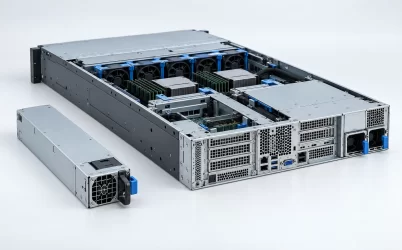
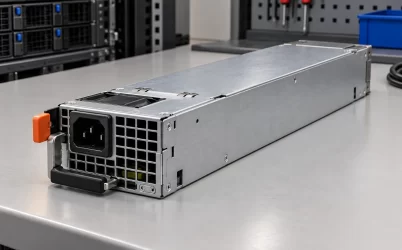
A removable power input module is the metal unit a technician can grasp at the rear of a server. A power backplane receives that module, makes the electrical connection, and routes its output toward the host. The server then imposes its own supported combinations and operating limits. A seller may call any one of these items a “900W power supply,” although a bare module cannot power a server without the receiving hardware. A kit listing may include the backplane and one or two modules; a server specification may describe the maximum output of the assembled arrangement. These are related but different products and different quantities.
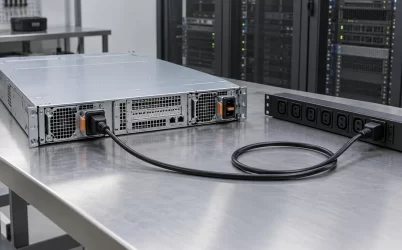
That distinction matters most when the proposed change is not a like-for-like module replacement. Adding a second input module to a single-module server sounds like a capacity upgrade. In a primary-and-backup design, however, the second module exists to keep the server running if the first becomes unavailable. It does not necessarily raise the permitted continuous load. The backplane, protection arrangement, and host qualification determine what the redundant assembly may deliver. A photograph showing two occupied bays cannot answer that question.
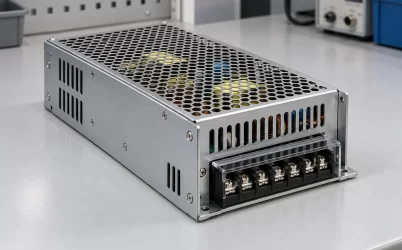
HPE’s published QuickSpecs for its older standard power supplies make the issue unusually visible. They identify separate input-module and backplane part numbers, distinguish one-module from two-module configurations, and publish output ceilings for low-line and high-line AC. The example is valuable precisely because the numbers prevent a common shortcut: multiplying the advertised module wattage by the number of installed modules. It should not be generalized to a modern CRPS cartridge, an ATX supply, or a different OEM server without that product’s own documentation.
One 900W family contains incompatible backplane combinations
In the HPE documentation, input module 744689-B21 is associated with backplane 745813-B21 in one configuration. The same QuickSpecs describe a different AC/240VDC input module, 775595-B21, used with backplane 814835-B21. HPE explicitly states that 744689-B21 will not work with 814835-B21. This is an electrical and system-assembly identity issue, not a small difference in advertised output. Two listings can both say “HPE 900W” and still represent parts that should not be substituted for each other.
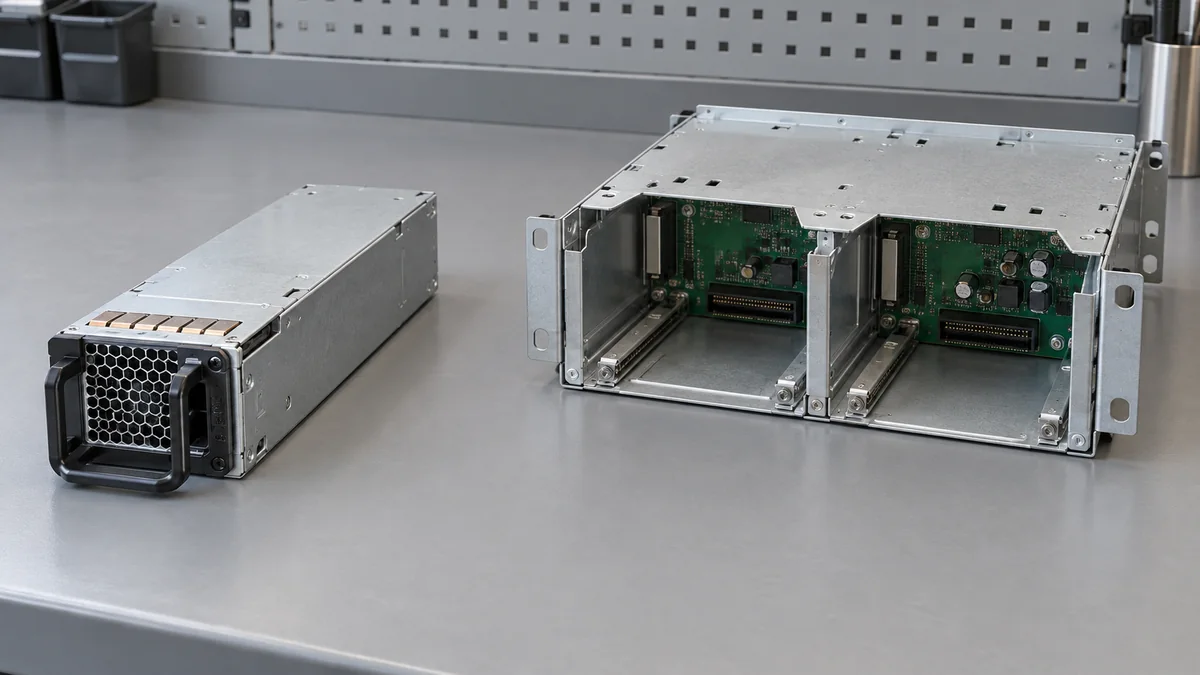
The document also says the 240VDC function of 775595-B21 is unavailable when that module is installed in 745813-B21; only AC input is enabled in that combination. That caveat illustrates why a connector that appears to seat is not proof that every advertised function survives the change. A replacement can potentially power the host under one source type while failing to preserve a planned DC-input feature. The approved host configuration and exact backplane part number have to be known before treating a module as a spare.
It is tempting to collapse the two families into a single “900W HPE redundant PSU” row in a procurement system. Doing so loses the information that makes the purchase safe. A receiving technician needs to distinguish an input module from a backplane kit, the installed backplane from a visually similar alternative, and a complete redundant kit from a one-module configuration. The vendor’s accessory description should name the actual part family rather than implying that all 900W-labelled hardware is interchangeable.
HPE’s document is specific to its listed ProLiant Gen9 and entry-level systems. It is not a current universal compatibility table for all HPE servers, and it does not prove that a third-party module fits one of those hosts. For a living system, the server’s own supported-option list remains the place to confirm the allowed assembly. The QuickSpecs explain the power-family relationship; the exact host documentation decides whether that relationship can be used in that chassis.
Why two installed modules need not deliver 1,800W
HPE’s notes for the AC/240VDC redundant kit describe primary and backup input modules rather than treating the pair as two independent loads that simply add together. The QuickSpecs state that its redundant AC modules do not share power: module 1 is primary, and module 2 is backup. The backup’s presence therefore changes availability, not the arithmetic ceiling of the host. In a failure, the surviving source must support the entire permitted server load through the documented backplane path. The separate 800W limit for the 744689-B21 configuration comes from HPE’s explicit assembly rating, not from an assumption about how that backplane switches modules.
For the 744689-B21 family, HPE’s Standard Power Supplies QuickSpecs state that a single input module can provide up to 900W at 200–240VAC and 550W at 100–127VAC. With two input modules installed in the redundant configuration, the stated maximum is 800W at 200–240VAC and 550W at 100–127VAC. The relevant result for a high-line redundant deployment is thus 800W for that particular arrangement, not 900W and certainly not 1,800W. The difference should be read as a system specification; the document does not invite an unsupported explanation of which individual component sets the 800W limit.
HPE separately lists the 775595-B21 input module with 814835-B21 backplane. The technical table for that two-module assembly states 900W at high-line AC and 550W at low-line AC. It would be wrong to transfer the 800W figure from the 744689-B21 arrangement to this different assembly, just as it would be wrong to transfer the second assembly’s DC-input capability to the first. “900W redundant” can describe several materially different identities even within the same manufacturer’s standard-power catalogue.
Consider a hypothetical server whose actual worst permitted DC demand is 840W. It would sit below the published 900W high-line ceiling of the documented single-module 744689-B21 arrangement, but above that family’s 800W high-line redundant ceiling. Installing a second module would not convert that 840W operating point into a protected one. The workload, power limit, or supported hardware configuration would have to change. This is an illustrative comparison against HPE’s stated limits, not a claim about a real customer server or a prediction of its failure behavior.
A second hypothetical server with a maximum 760W DC demand could fall within the 800W high-line redundant limit, assuming the host supports the cited kit and no tighter environmental or configuration limit applies. The margin is then 40W relative to that published output ceiling. Whether 40W is enough operational room cannot be decided from the PSU label: fan behavior, processor power policy, installed adapters, storage activity, and host-level limits determine the actual peak demand. The point is that the correct comparison is between a defined server demand and the permitted assembled-system output in the required failure state.
Input voltage changes the same comparison again
The HPE figures above include a second boundary: the high-line output ceiling is not available across the entire accepted AC-input range. The cited configurations list 550W at 100–127VAC. A server drawing 760W DC in the prior illustration would therefore not fit the published low-line ceiling, even though it fits the 800W high-line redundant ceiling. The second module cannot make up the voltage-dependent shortfall. This is a model-specific published limit, not a claim that every 900W supply derates to 550W on low-line AC.
“Accepts 100–240VAC” and “delivers 900W from any outlet in that range” are not equivalent claims. The former describes the input range; the latter would require an output-rating table supporting it. The correct site comparison uses the voltage that actually reaches the PSU inlet through the rack distribution system. A facility could have high-line service in one room and a lower-voltage branch in another. Moving the same legacy server between them could change its supported output, even if the detachable modules and backplane remain untouched.
Input current and upstream equipment must also be considered, but DC nameplate output cannot be read directly as wall draw. AC input includes converter losses, and its current depends on the actual output load, efficiency at that point, voltage, and power factor. HPE’s QuickSpecs publish input-power and current figures for the named assemblies at stated voltages. A PDU or UPS should be evaluated against the appropriate host and supply figures, rather than against “900W” as if it were a measured AC load. There is no need to invent an efficiency percentage for an unidentified replacement module to make this distinction.
For a rack with A and B feeds, another asymmetry is possible: the feeds may not be electrically equivalent. If one side is high-line and the other is low-line, the allowed load after a feed failure may depend on which side survives. Whether that mixed arrangement is supported for a particular host is a separate manufacturer question. The HPE example is enough to show why each surviving supply condition needs to be identified; it does not authorize a mixed-feed installation in every server.
What “redundant” means for service in this kit
HPE describes the relevant input modules as hot-plug. In a correctly supported redundant configuration, that gives a technician a way to replace a failed module while the backup continues supplying the host. It does not promise that a live extraction is safe under any load or that the backplane itself has become redundant. The surviving module must have an operating input and enough permitted output for the running server. If a common backplane or upstream source fails, two input modules installed on that same dependency do not remove the common failure point.
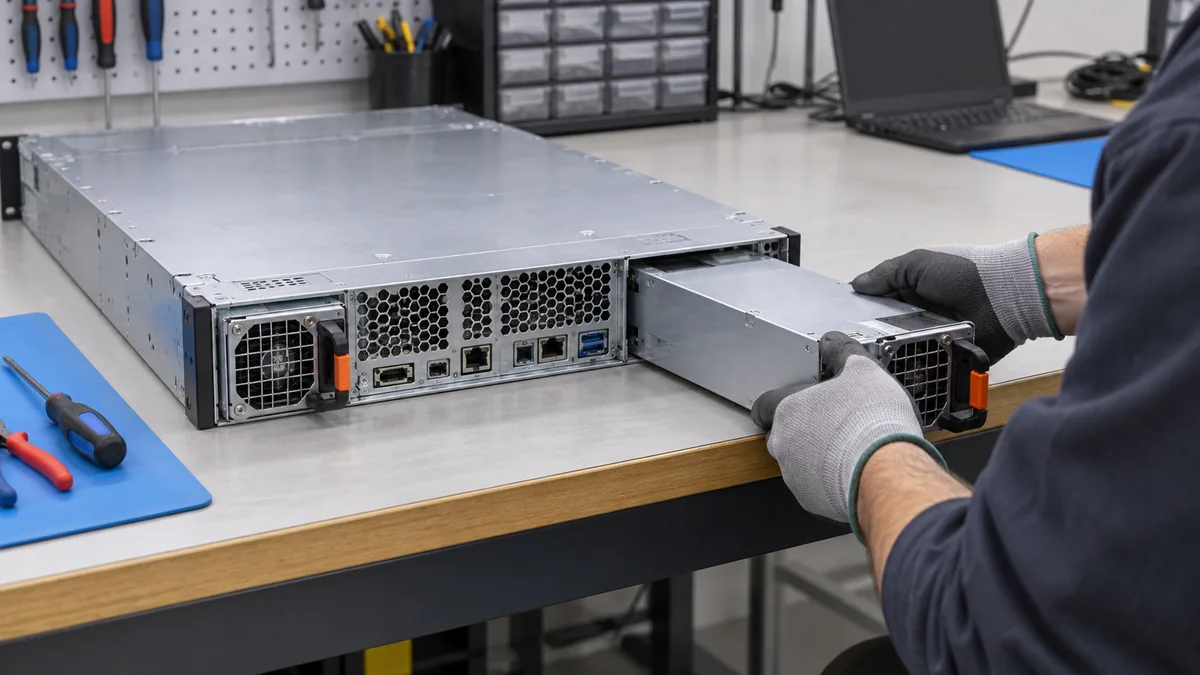
The primary/backup description also changes how to read telemetry or an idle-looking module. A backup may contribute little or no normal output in an architecture where the modules do not share power. That is not evidence, by itself, of a defective cartridge. Conversely, two illuminated module handles do not prove the backup path can sustain the host after primary loss. The relevant evidence would be the platform’s supported configuration and its power-state behavior, interpreted with the actual installed options. This article is not a procedure for unplugging a production server to “test” redundancy.
In a replacement purchase, the electrical mating arrangement should be treated as part of the spare. A module that fits the physical space yet belongs to the wrong backplane family may not operate correctly; HPE even identifies an explicit incompatible part combination. The host can also require particular firmware or option support, which cannot be established from this broad keyword alone. A procurement record that preserves the installed module part number, backplane part number, and server model is far more useful than one containing only the phrase “900W server PSU.”
There is a practical distinction between restoring service and redesigning the power system. Replacing a failed module with the exact approved spare aims to return the machine to its qualified state. Converting a one-module installation to a redundant one changes the assembly and may change its supported output ceiling. Moving from one backplane family to another may change electrical input capability and compatibility. Those are different projects, with different evidence needs, even though a shopping search returns them together.