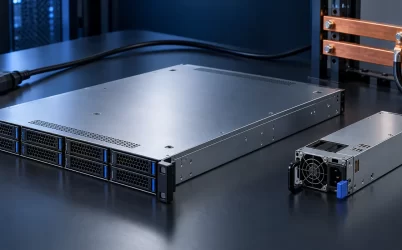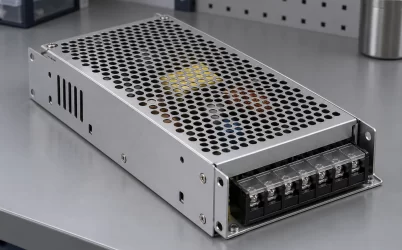
When purchasing a 600W 54.5V CRPS power supply, an optional standby rating creates a specific question: does the supplied hardware provide the auxiliary output the host needs? A listing that includes 12 V standby does not establish its presence on every delivered unit. That distinction matters when management electronics must operate before the main power path is available. It also changes the purchasing evidence needed for a host that already has a separate housekeeping source.
G1483-0600WNA provides a documented example. Its EESS equipment profile lists a 54.5 V DC output at 11 A maximum, a 600 W maximum output rating, and an optional 12 V standby output at 3 A. Those entries establish a useful starting point. Confirming the delivered configuration requires a connection between the order, the actual hardware, the host requirements, and an agreed verification method.
Read the optional note at the correct boundary
The rated object in this example is the power supply identified by the equipment profile. Its output entries do not describe power available to every device inside a completed chassis, nor do they establish a network appliance’s usable port-power allocation. Downstream distribution and conversion belong to the receiving equipment. Keep that boundary explicit when copying ratings into a purchasing specification.
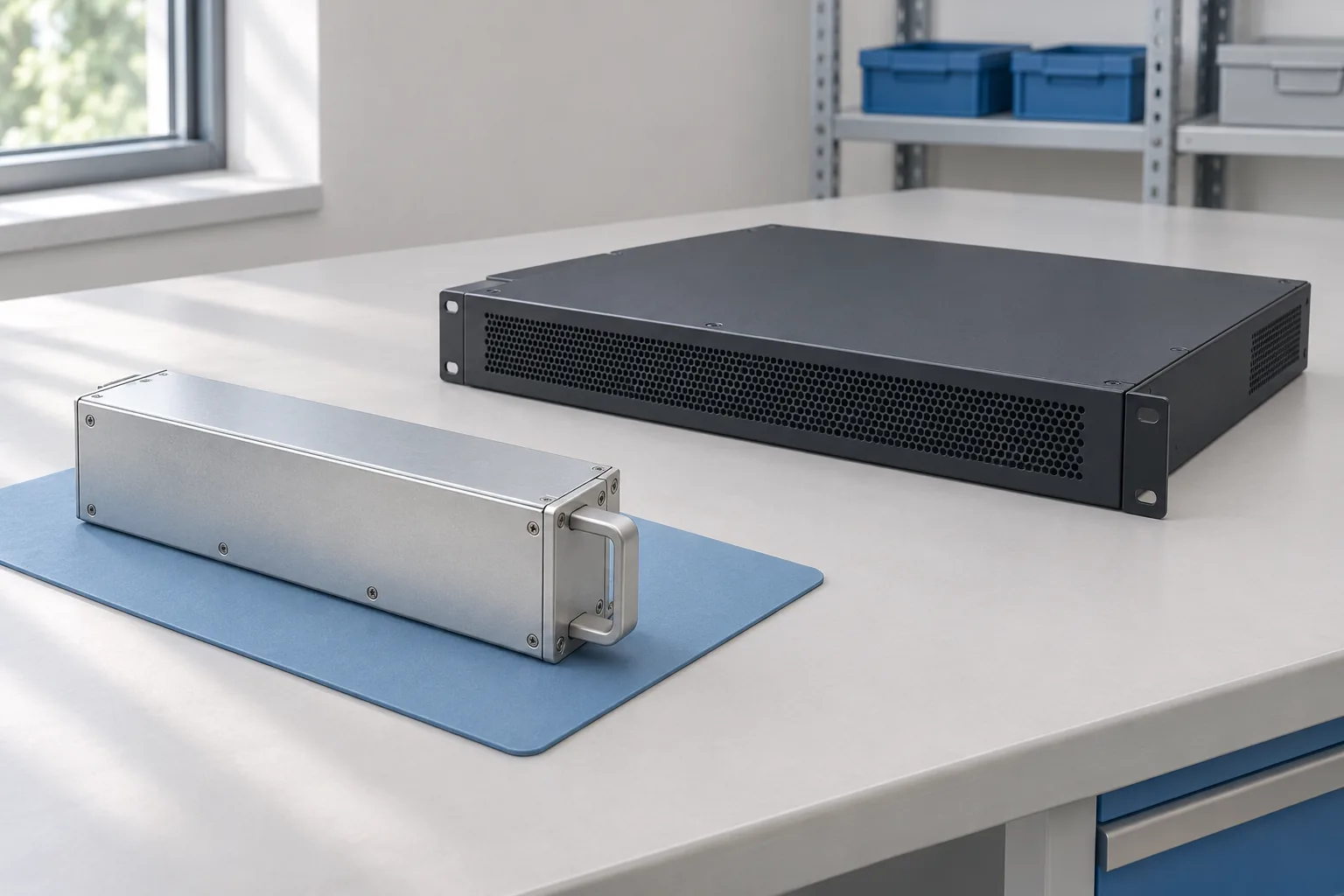
To locate the primary record, use the EESS public certificate search. Search the exact model G1483-0600WNA, then identify certificate GMA-515448, revision 00, and Equipment Profile 105. The profile associates the main output with 54.5 V DC and 11 A maximum, states 600 W maximum output power, and marks the 12 V standby, 3 A entry as optional. Preserve the profile identifier alongside any extracted rating so the evidence remains traceable.
The optional notation leaves an important distinction unresolved: a documented auxiliary rating and an auxiliary output present on a particular unit are different claims. The record does not explain how to identify that option on delivered hardware. It does not establish a suffix interpretation, an ordering switch, or a field setting that enables it. A buyer should therefore request an explicit configuration statement rather than translating the notation into an assumed product feature.
The same restraint applies to operating behavior. The profile does not establish when standby becomes available, whether it remains available with the main output disabled, or what happens during a host transition. It also does not define simultaneous loading of both outputs. Treating the listed maxima as independently available under every operating condition would extend the record beyond what it says.
The manufacturer’s public product page identifies the exact model, but its brief feature information does not resolve these standby questions. For the commercial identity, Powernexu’s G1483-0600WNA catalog entry provides a matching reference. Neither a catalog description nor a familiar CRPS label replaces the controlled configuration and interface documents needed for the intended host.
Decide whether the host depends on module standby
The host requirement determines what must be confirmed about the optional output. Two hypothetical chassis can use a main power module for similar workloads yet need different evidence because their management electronics receive power differently. Establishing that distinction before ordering prevents a vague request for “standby support” from becoming the entire electrical requirement.
In the conceptual arrangement considered here, the main path supplies the host’s active loads. A separate auxiliary path supplies management electronics only if that path exists in the chosen configuration and is approved for the host. This is a functional distinction, not a connector drawing or a startup sequence. The actual sources, returns, controls, and operating states must come from the applicable equipment documentation.
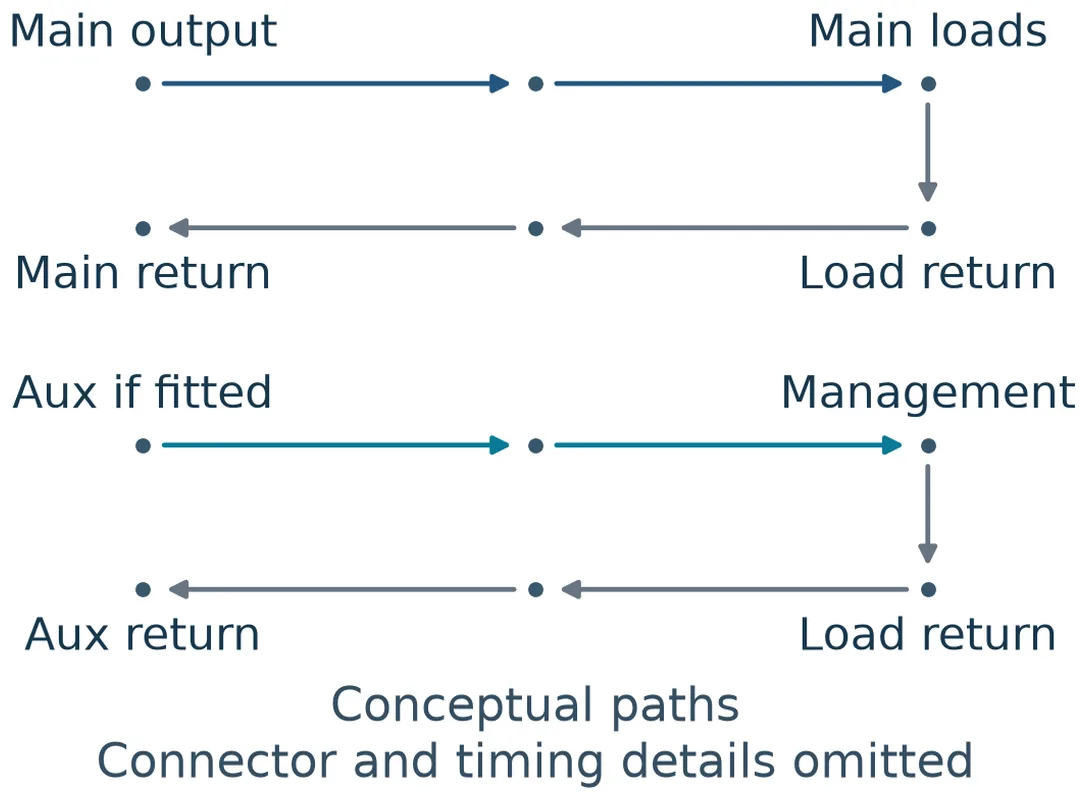
A host that needs management before main power
Consider a hypothetical chassis whose management controller must be powered before it can authorize the main power path. If that controller relies on the module’s auxiliary output, confirming only the 54.5 V main rating leaves the startup dependency unanswered. The purchaser needs evidence that the supplied configuration includes the required auxiliary function and that its documented behavior satisfies the host’s prerequisite.
Presence alone is insufficient for this arrangement. The host designer must establish the required voltage range, demand, interface, and conditions under which management power must be available. The module documentation must answer the corresponding source-side questions. A 12 V standby entry does not establish those details, and it cannot by itself prove that the controller will be powered at the moment the host needs it.
This evidence path therefore starts with the host’s management dependency and follows it back to the delivered module. The integration record should identify the controlling host document, the applicable module specification, and the supplier’s configuration confirmation. If the required operating-state behavior remains undocumented, the purchasing description is incomplete even when the nominal auxiliary voltage appears to match.
A host with a separate housekeeping source
Now consider a hypothetical chassis with a separate, documented source for its management electronics. Its purchasing question changes. The integrator must establish that the separate source supports the required management states and that the selected main module is approved within that arrangement. This does not automatically make the optional output irrelevant; the host documentation must explain how the module interface is used.
For this host, evidence should trace the housekeeping supply independently of the main output. Identify which assembly powers management, which operating conditions it supports, and how the approved host design treats any auxiliary connection associated with the module. Do not assume an unused output may be interconnected with the separate source. The approved interface must define that relationship.
The resulting configuration could legitimately have a different standby requirement from the first hypothetical host. What changes is the documented dependency, not the meaning of the 600 W rating. A supplier response that is adequate for a separately powered management architecture may leave the first chassis unable to meet its startup requirement. The acceptance criteria should distinguish those cases explicitly.
Tie the standby requirement to the supplied hardware
A useful order description names the required function and the evidence needed to establish it. For the first host arrangement, the request might require a supplied configuration with the documented auxiliary output and behavior needed by the named host revision. For the second, it might require confirmation of the module configuration approved for the separately powered housekeeping architecture. These are purchasing requirements, not instructions for modifying a module.
Include the exact model, applicable hardware revision or other manufacturer-defined configuration identifier, and the host assembly to which the confirmation applies. Where a supplier uses additional identifiers to distinguish configurations, ask for their documented meaning. Do not invent a suffix rule from similar products or infer one from a photograph. An unexplained code is still an unresolved identification question.
The supplier’s confirmation should connect the functional statement to the delivered unit or lot. A general email saying that a product family “supports standby” may describe a capability without identifying what will arrive. A stronger response names the supplied configuration, references the applicable controlled documentation, and states how receiving personnel can relate that confirmation to the shipment.
That relationship need not depend on a particular marking convention. The manufacturer might use a configuration record, a revision identifier, or another controlled means of traceability. The important point is that the buyer can follow the documented association. A serial number or lot number is useful when it connects to a configuration statement; by itself, it does not explain which auxiliary function is present.
A sample also needs that connection. Demonstrating the requested behavior on one module does not establish that every later shipment has the same configuration. Conversely, an unfamiliar external label does not prove a functional difference. Ask the supplier to explain the relationship between the sample, the ordered configuration, and the production delivery rather than using appearance as the deciding evidence.
Make the acceptance record answer four different questions
The acceptance record should separate what was requested, what was supplied, why it matches the host, and what was demonstrated. Combining these into one sentence such as “12 V standby verified” loses the distinctions that make the record useful. Each part answers a different question and should point to evidence appropriate to that question.
| Record element | Question it answers | Evidence to retain |
|---|---|---|
| Order configuration | What auxiliary function did the buyer require? | Agreed order description, exact model, configuration identifiers, and referenced requirements. |
| Delivered hardware | Which supplied units does the confirmation cover? | Supplier statement tied to the shipment, unit, or lot through documented identifiers. |
| Integration matching | Why does this configuration satisfy the intended host? | Applicable module specifications and host documents covering the required interface and operating states. |
| Witnessed verification | What behavior was actually demonstrated? | Manufacturer-defined method, tested configuration, conditions, observations, and acceptance criteria. |
The order configuration should describe a requirement that can be assessed. “Optional standby required” is ambiguous because it repeats the catalog notation without stating the intended function. A better description identifies the host’s auxiliary requirement and asks the supplier to confirm the configuration that satisfies it. The controlled technical references can carry the detailed electrical conditions without turning the purchase order into an improvised datasheet.
The delivered-hardware record then closes the identity gap. It should allow a receiving inspector to associate the physical shipment with the supplier’s confirmation. If the supplier confirms a different revision from the one referenced in the order, the discrepancy needs an engineering disposition. A matching nominal main output does not resolve a change affecting the auxiliary path.
Integration matching addresses another possible gap: a correctly supplied output can still be unsuitable for the host. The host may require behavior that the module documentation does not establish, or it may use a different approved interface arrangement. Record the relevant limits and dependencies from both sides. An output observed at the source does not establish delivery through the host distribution path to the management load.
Finally, keep the verification statement narrow enough to remain true. A test report should distinguish an auxiliary output observed under specified conditions from a complete host-management demonstration. If both are tested, report both boundaries. This makes the record useful for later troubleshooting: it shows whether the original evidence concerned the module alone, the assembled host, or a particular combination of the two.
A witnessed check needs a manufacturer-defined method
A witnessed check should answer the unresolved functional question using the manufacturer’s defined test method. It should not begin with a technician guessing contacts or experimenting with control signals. Obtain the applicable instructions, approved test interface, required conditions, and acceptance limits before arranging the demonstration. If the method is unavailable, a nominal rating is not enough to construct a safe substitute procedure.
The test configuration matters as much as the observation. Record the identity of the module, any relevant hardware revision, the host or approved fixture, and the document revision governing the method. Also record the operating condition being assessed. A result collected with the main path active cannot automatically answer a requirement concerning management availability before the main path runs.
For a host that depends on module standby, the demonstration should address the documented condition in which management power is required. The relevant evidence may include source behavior and delivery to the receiving management circuitry, as defined by the approved method. Do not assign a universal startup delay, enable polarity, measurement point, or loading combination. Those details must be specified for the actual equipment.
For a host with separate housekeeping power, the demonstration has a different purpose. It should establish the required management function through the documented separate source and confirm the approved relationship with the main module configuration. Observing management activity alone does not identify which source powered it. The test record needs enough configuration information to support that attribution without relying on an assumed internal connection.
Witnessing provides an accountable observation, but it does not expand the tested scope. A successful auxiliary check does not establish current sharing, combined-output capacity, live replacement behavior, or chassis fit. Likewise, a successful host startup does not characterize every management state. Describe the actual question answered, the conditions applied, and any requirement left outside the demonstration.
If results disagree with the supplier’s configuration statement, preserve the unit identity and test conditions before seeking clarification. The disagreement could concern identification, interpretation, test setup, or hardware behavior; the observation alone does not select the cause. The supplier and integration engineer need the same evidence to resolve it. An unexplained result should not be converted into an undocumented operating allowance.
Carry the configuration evidence into repeat orders
Repeat procurement is where a carefully resolved optional feature can become ambiguous again. A purchasing system may retain the model and wattage while dropping the auxiliary requirement or its supporting document references. Preserve the functional requirement and configuration association in the repeat order so the supplier can confirm that the new delivery still matches the intended host.
A substitution or revision change deserves attention specifically where it affects that association. Ask whether the documented auxiliary function, identification method, and host approval remain applicable. This does not require treating every shipment as a new design project. It requires retaining enough evidence to recognize when the basis of the previous acceptance has changed.
For a 600W 54.5V CRPS power supply with an optional standby entry, the purchasing outcome should be precise: the supplied hardware is identified, its auxiliary function is documented where required, the host’s management source is accounted for, and the agreed demonstration answers the relevant operating question. That record makes the optional notation usable without turning it into a promise the source never made.