A proposed 277V/480V data center migration can install new rack distribution while leaving the existing step-down transformer indispensable. One retained storage system, network device, or server group may still require its lower-voltage supply. Moving the largest compute loads does not remove that dependency. Retirement becomes possible after the remaining required services have supported destinations and no longer rely on the conversion stage being removed.
The migration problem is therefore about order: which equipment moves first, what remains energized between moves, and which dependency controls the transformer’s exit date. The following hypothetical mixed fleet illustrates that planning problem. It establishes neither product compatibility nor permission to modify a particular installation. Its purpose is to distinguish a functioning higher-voltage deployment from a completed migration.
The last retained load can control the infrastructure schedule
Assume an existing installation receives 480Y/277V distribution and uses a step-down stage for its established lower-voltage IT circuits. In that wye notation, nominal 480V describes phase-to-phase voltage and nominal 277V describes phase-to-neutral voltage. The proposed destination supplies 277V AC to equipment explicitly supported for that input. This example retains individual server conversion; it does not introduce a rack DC bus.
Divide the illustrative fleet into three groups. Group A contains servers whose exact installed configurations have documented eligibility for the proposed destination. Group B contains storage equipment that must retain its current supply until replacement. Group C contains network and management equipment whose migration eligibility remains unresolved. These are stipulated planning categories, not findings about any manufacturer’s products.
The service requirement is to preserve the applications and their necessary storage, network, and management functions throughout the project. An application moving onto Group A does not release Group B if its data still resides there. Similarly, a migrated server may continue depending on a Group C switch that remains connected to the old distribution.
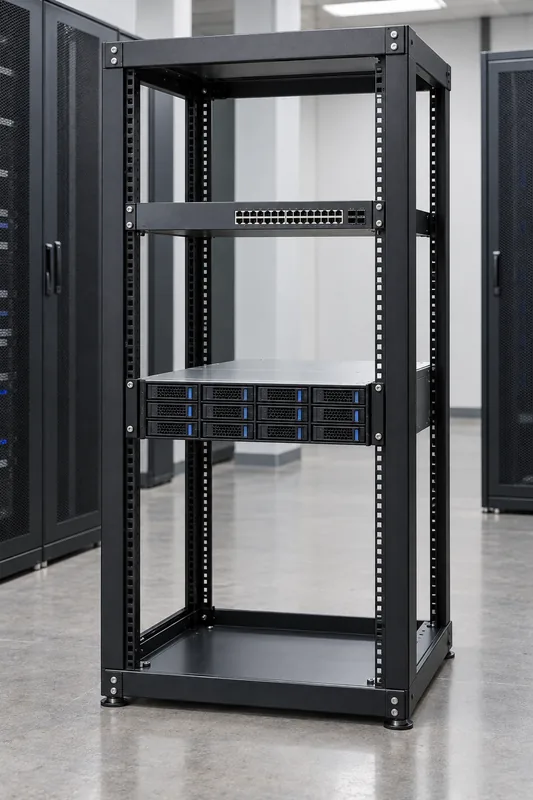
Record each group’s disposition as move, replace, retain, or unresolved, with a dependency connecting that disposition to the old electrical infrastructure. “Retain” needs a duration or an exit event. “Unresolved” needs a named missing fact. Neither category can be counted as migrated simply because its electrical demand is small relative to the compute fleet.
This changes the project’s critical path. The transformer retirement date can follow a storage replacement or network transition rather than the delivery date of the new rack distribution. Bringing that dependency forward prevents electrical demolition from being scheduled ahead of the services that still require the equipment.
Manufacturer options determine which moves are real
Dell’s technical note on 277V AC and HVDC power supplies describes supplying compatible PSUs through 277V line-to-neutral distribution derived from a 480V three-phase system. It identifies avoiding an intermediate lower-voltage transformer stage as an architectural opportunity. That supports investigating the migration route; it does not identify an approved replacement for an arbitrary retained server.
For Group A, eligibility must already connect the host configuration, exact PSU option, applicable input conditions, and intended rack supply. An inventory entry saying “high-voltage PSU available” leaves the move conditional. The option may concern another platform configuration, require additional parts, or have installation restrictions absent from the inventory summary.
A PSU replacement and a complete server replacement also create different schedules. A supported module change can preserve the host and its application placement. Replacing the host introduces data movement, application readiness, and disposal dependencies. Buying the converter early does not eliminate those tasks, while buying a complete server may make the original module-upgrade plan unnecessary.
Mixed-input transition states deserve particular attention. Do not assume that a server may temporarily operate with one PSU connected to the old supply and another connected to the new supply, or with different PSU variants installed together. Such arrangements need explicit platform support and an installation design covering the proposed state. Otherwise, plan another supported transition, potentially including an authorized service interruption.
No exact host option list, PSU specification, or site electrical drawing accompanies this example. Consequently, its groups describe how documented eligibility affects scheduling without approving an actual move. Powernexu’s facility-to-server power requirements method addresses the broader evidence behind that eligibility; the narrower task here is assigning its consequences to the migration sequence.
Two migration orders leave different equipment behind
One sequence moves eligible compute first. Group A enters the new distribution while Groups B and C remain on the established circuits. This can bring supported compute capacity into use without waiting for every retained device. It also creates an overlap period during which operations must maintain both distribution arrangements and their remaining service dependencies.
A second sequence resolves the blocking storage and network transitions before moving the compute group. Group B receives its supported replacement or service relocation, and Group C’s destination becomes established. Group A then moves after those dependencies are released. This can shorten the period between the compute move and transformer retirement, although the new distribution may spend longer awaiting useful load.
Compare both sequences against the same service requirement. Calling the second sequence faster because its final electrical cutover is shorter would omit the preceding storage and network work. Calling the first sequence complete after compute relocation would omit the infrastructure still serving retained equipment. The project clock must include those intervals.
| Migration order | Intermediate installation | Dependency delaying retirement |
|---|---|---|
| Eligible compute first | New compute distribution operates alongside retained lower-voltage circuits | Storage replacement and unresolved supporting equipment |
| Blocking services first | Existing distribution remains while storage and network destinations are established | Completion of service transitions before the compute move |
The better sequence can change when replacement dates move. If Group B must remain for an extended support period, compute-first migration may provide useful capacity while deliberately preserving a smaller legacy zone. If Group B’s replacement is imminent, grouping the electrical changes around that event may avoid temporary distribution work that would have little remaining use.
Workload relocation can release a dependency without physically moving the original device. A storage system whose required data and services have transferred elsewhere may be shut down and removed under the retirement plan. Conversely, moving a storage chassis into another cabinet while keeping it on the same transformer changes its location without releasing the electrical dependency.
The schedule should therefore follow service disposition as well as equipment location. A completed rack move, an installed PSU option, and an application running at its intended destination are separate milestones. Transformer retirement follows the milestone that actually ends dependence on its supplied circuits.
Temporary distribution becomes part of the migration design
A reserved destination rack provides space to establish the supported replacement installation while the retained rack remains intact. That physical separation can make staged service transfer easier to organize. It does not establish electrical capacity, approved outlet assignments, or permission to operate the destination before its infrastructure is ready.
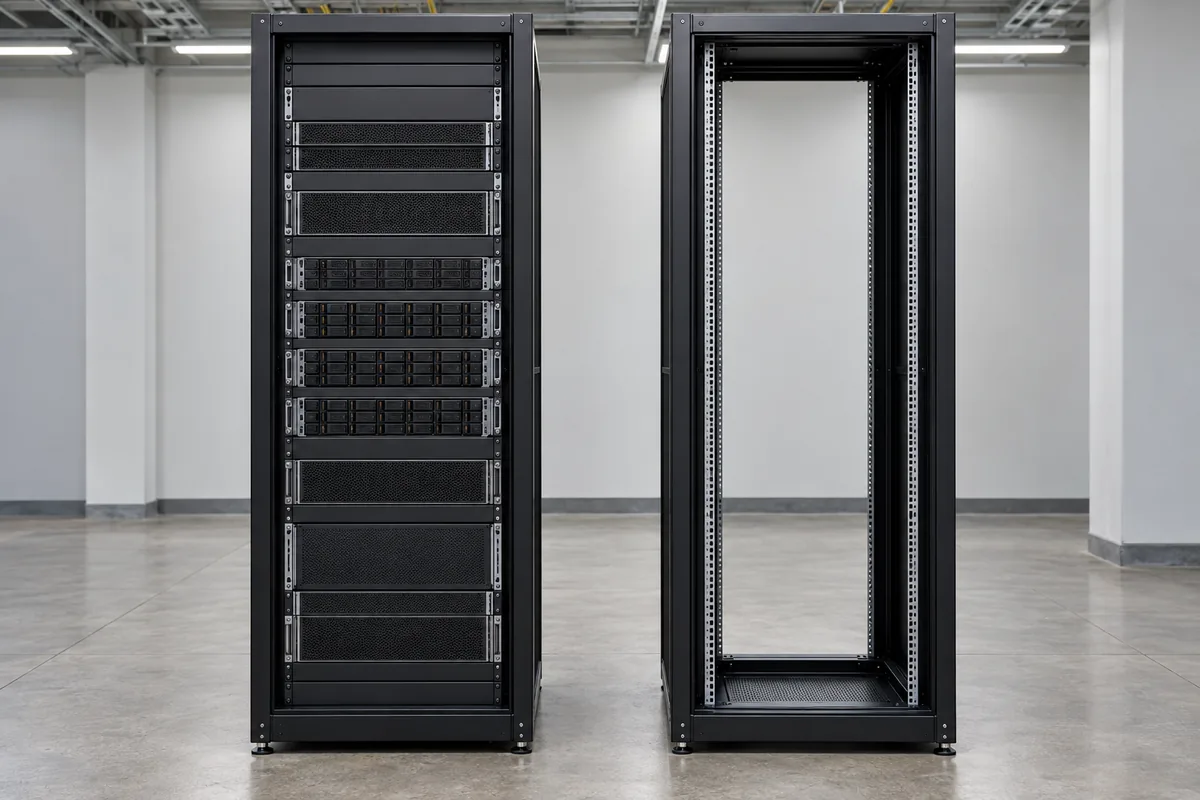
Space availability alone can conceal a difficult intermediate arrangement. The destination may need to host replacement storage alongside the compute population temporarily, while the original storage remains active during data transfer. For that interval, both installations consume resources. Capacity released after retirement cannot be spent in advance to support the overlap.
Temporary lower-voltage distribution may preserve Group B while its original row is cleared. Such an arrangement moves the dependency rather than eliminating it. If a new transformer or conversion assembly is introduced for that purpose, distinguish retirement of the original asset from elimination of the conversion function. The project may achieve one without achieving the other.
Phase allocation can change as groups leave. An initially balanced population of single-phase loads need not remain balanced after selected racks migrate. The electrical designer needs the intermediate circuit assignments and supported demand, not merely the final rack total. This is a consequence of staged removal, rather than a reason to prescribe a universal balancing arrangement.
Source assignments can also change during a move. A destination that supplies the correct voltage may still place two intended server feeds within a different shared maintenance domain. Retain the required continuity boundary through each intermediate stage. Do not treat a temporary assignment as acceptable merely because it will disappear after the next migration window.
Partial migration changes the economics of the old stage
Moving Group A reduces the demand carried by the existing step-down stage, but does not establish that the stage can be de-energized. Transformer losses include effects that depend on energization and loading. Their actual values require applicable equipment data or measurement. Reduced secondary demand therefore cannot be translated directly into complete removal of the stage’s energy consumption.
The business case should distinguish three milestones: demand transferred, infrastructure made unnecessary, and infrastructure actually retired. They can occur on different dates. An electrically unloaded transformer may remain energized pending authorized isolation, while a lightly loaded transformer may remain necessary for a service that has no approved destination.
Maintenance and space benefits have similar timing. Removing most connected servers may simplify the remaining circuit population, yet the transformer can still require inspection, access, monitoring, and maintenance. Floor space becomes available according to the physical removal plan, rather than when the last compute rack changes supply.
A small legacy zone can nevertheless be a rational interim outcome. Retaining a supported storage installation until its planned replacement may avoid an unnecessary accelerated refresh. Compare that retention cost with temporary infrastructure, migration effort, and the consequences of disturbing an established service. The analysis need not force immediate transformer removal to justify every higher-voltage deployment.
Set an explicit endpoint for the interim zone. Otherwise, a convenient temporary outlet can attract another lower-voltage device and extend the conversion dependency. New equipment entering that zone should carry an acknowledged effect on the retirement schedule, rather than inherit an assumption that the old infrastructure will remain indefinitely.
Retirement follows the final dependency, not the final rack delivery
Return to the hypothetical fleet. After Group A moves, Group B still prevents retirement. After storage service transfers to its supported replacement, Group C may become the remaining blocker. Its unresolved network or management requirement must receive a supported destination or an accepted service disposition before the old stage becomes unnecessary.
The remaining load search should include equipment that is quiet during ordinary production. Standby management devices, occasionally used service equipment, and reserved recovery connections can retain an operational dependency without producing an obvious sustained load. A low meter reading does not establish that the circuits have no required role.
Rollback has a deliberate end as well. Keeping the original distribution available during an agreed recovery interval can be reasonable, even after normal service has moved. That interval belongs in the schedule. Once rollback is formally released, authorized isolation and removal can proceed under the site’s electrical procedures, with circuit records updated to describe the resulting installation.
The completed migration has a concrete outcome: retained services operate at their supported destinations, temporary dependencies have ended, and the retired stage no longer supplies a required operating or recovery function. New 277V capacity can be useful well before that point. Recognizing the difference allows the project to report progress honestly while preserving a credible date for removing the old step-down infrastructure.