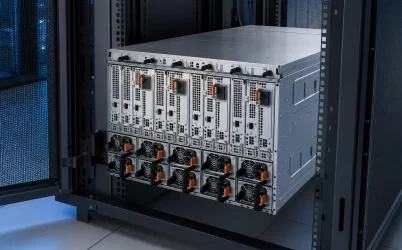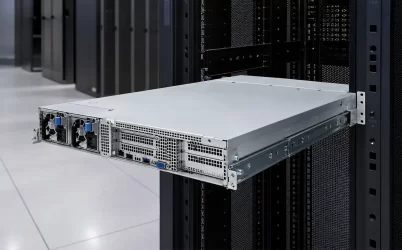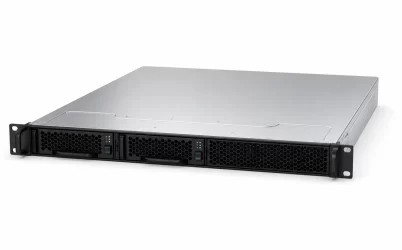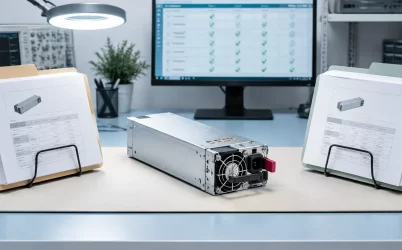
The phrase server grade power supply is useful for finding candidates, but it does not establish a universal certification, form factor, or level of compatibility. A defensible purchase links every important claim to evidence for the exact PSU, host, assembly, and operating condition. Host approval should support replacement claims; model documentation should support electrical ratings; drawings and interface records should support integration; and rack data should support deployment. If the evidence applies only to a different server category, revision, input voltage, cooling condition, or supplied assembly, the “server grade” description remains a shortlist label rather than an engineering approval.
“Server grade” narrows the market, not the engineering boundary
Server power products commonly offer characteristics associated with continuous computing infrastructure: regulated outputs, defined protection behavior, high power density, forced-air cooling, monitoring, and options for redundant or hot-plug operation. None of those characteristics should be inferred from the grade label alone. They must be documented for the exact product and configuration.
A catalog category proves that a manufacturer or seller classifies a product for server use. It does not necessarily prove that the product is supported in a particular host. Similarly, compliance with a named specification has only the scope defined by that document. The Intel EPS12V Entry-Level Power Supply Specification, for example, documents requirements for its stated entry-level pedestal-server scope. It should not be treated as a universal certification covering every rack, blade, proprietary hot-plug, CRPS, or rack-level power architecture marketed as server grade.
The practical question is therefore not whether a candidate looks sufficiently robust. It is: what use does the available evidence authorize? Evidence adequate for purchasing an exact OEM spare may be insufficient for connecting the same module to a custom PDB. Conversely, detailed electrical documentation may support a new integration without making the PSU an approved substitute in an existing branded server.
Name the object before evaluating its claims
Listings often apply the same description to materially different objects. Resolving the noun behind “server grade” prevents evidence for one object from being applied to another.
| Object being purchased | What it includes | Primary qualification question |
|---|---|---|
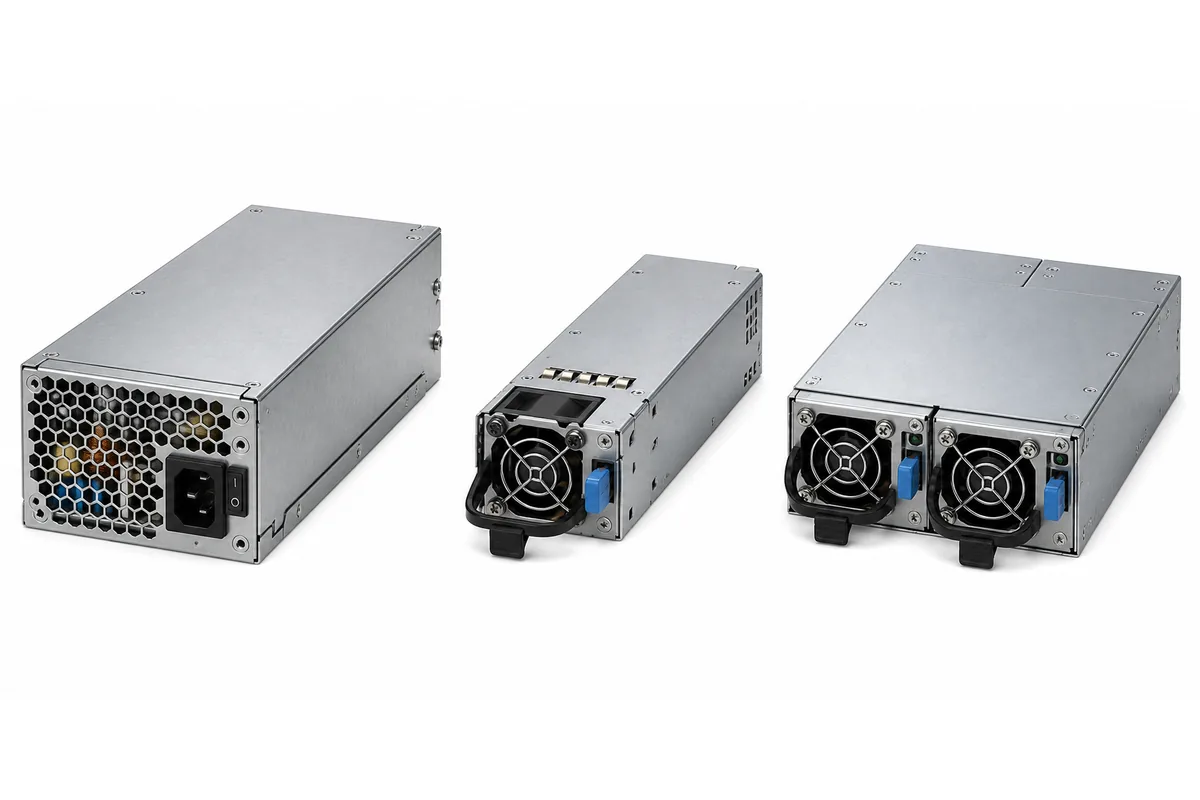
| Fixed, cabled PSU | A complete converter with attached or detachable host cables | Do its envelope, mounting, output connectors, rail behavior, airflow, and host requirements match the chassis? |
| Removable PSU module | A plug-in converter intended to mate with a cage, PDB, or backplane | Is the exact module and revision supported by the mating assembly and host? |
| Redundant power assembly | Modules plus some combination of cage, PDB, harnesses, controls, and mounting hardware | Which components are included, and what supported failure condition can the complete assembly survive? |
| Platform-approved spare | An exact replacement or documented supersession for a named server configuration | Does the host manufacturer authorize this identity, revision, pairing policy, and service use? |
A platform-approved spare may physically be a removable module, but its commercial identity includes the host support relationship. A bare module with similar dimensions lacks that relationship until documentation establishes it. A complete redundant assembly creates a different boundary again: module specifications cannot independently prove the current capacity, isolation, connector loading, or control behavior of the PDB and downstream harnesses.
Packaging terminology helps classify candidates, but it does not finish the comparison. The detailed distinctions among fixed, proprietary, CRPS-family, and related modular ecosystems are covered in Powernexu’s server PSU form-factor reference. For the evidence matrix, record the exact supplied object first and then attach claims only to the components they cover.
The claim-to-evidence matrix assigns each fact to its proper authority
A useful matrix does more than collect datasheets. It separates claims that may appear adjacent in a product listing but require different sources. Each row should identify the claimed capability, the hardware boundary, applicable conditions, controlling evidence, and unresolved limitations.
| Claim group | Question the record must answer | Strongest applicable evidence | What the evidence does not prove by itself |
|---|---|---|---|
| Identity and scope | Which manufacturer, model, revision, module quantity, and assembly are under review? | Manufacturer label, controlled datasheet, bill of material, quotation, and revision record | Compatibility merely because another product has similar branding or wattage |
| Specification scope | Does a cited specification cover this PSU category and intended server configuration? | The specification’s scope, normative requirements, and applicable product documentation | Requirements outside the document’s stated product or deployment boundary |
| Host support | May the exact part be installed in the named server and configuration? | Host parts list, service manual, configuration guide, or documented supersession | Use in an unrelated server or a custom chassis |
| Electrical interface | Do main power, standby, control, sense, sharing, and management functions agree? | Model-specific interface control information and mating PDB documentation | Electrical equivalence based on connector appearance |
| Mechanical and service interface | Will the PSU seat, latch, cool, and move through the required insertion or extraction path? | Dimensioned drawings, cage drawings, host assembly records, and service instructions | Operational compatibility based only on external dimensions |
| Operating envelope | Under which input, output, temperature, altitude, and airflow conditions are ratings valid? | Exact-model datasheet, derating information, thermal requirements, and host limits | Full rated output under conditions the documentation excludes |
| Redundancy and fault behavior | What load remains supported after the specified module or source event? | Host architecture, PDB design evidence, supported PSU population, and operating policy | Protected capacity obtained by adding module nameplates |
| Management and service | Will the host recognize, monitor, alarm, isolate, and restore the module as intended? | Host firmware support, management definition, service documentation, and applicable interface data | Complete BMC behavior from the presence of PMBus alone |
| Lifecycle and supply | Can the approved identity be purchased, received, stocked, and reordered without uncontrolled substitution? | Manufacturer change control, traceable part numbers, supplier declarations, and receiving records | Continued equivalence when a seller ships an unspecified alternative |
The matrix should preserve conditions rather than copying isolated numbers. A wattage entry needs the applicable input and thermal state. An efficiency claim needs its defined test basis and operating point. A redundancy claim needs the required module population and surviving state. Powernexu’s analysis of redundant server power supply ratings explains how wattage, derating, efficiency, and 1+1 capacity answer separate questions; the claim matrix should reference those distinctions without collapsing them into one “performance” field.
Platform evidence and PSU evidence are not interchangeable
A PSU datasheet can establish characteristics of the converter under its documented conditions. It generally cannot authorize installation in every server that could theoretically use those characteristics. Host documentation is the stronger source for a supported replacement because the host provider controls the bay, PDB, firmware, cooling behavior, and configuration policy.
The reverse limitation also matters. A host parts list may establish that a spare belongs in a server, but it may not provide enough information to design a new PDB around the module. New integration can require contact definitions, sequencing, inrush behavior, current-sharing expectations, control voltage domains, communication details, mechanical datums, airflow requirements, and fault-isolation responsibilities. Approval for replacement and evidence for integration are different authorizations.
Assembly claims require assembly-level evidence
Terms such as redundant, hot-swap, monitored, or field-replaceable describe behavior created by more than the converter. A module may be capable of participating in current sharing, while the host determines whether the installed population operates as 1+1, load shares without redundancy, or follows another policy. Hot-plug service also depends on the mating connector, bus isolation, insertion sequence, surviving capacity, and host procedure.
Record which assembly creates the claimed behavior. If a seller offers only a module, do not attach cage, PDB, harness, or host capabilities to the line item unless the quotation references the controlled assembly in which those capabilities are supported.
The same PSU can pass one authorization and fail another
Qualification depth should follow the intended action. Treating every project as a generic compatibility exercise either leaves dangerous gaps or demands information that is unnecessary for the actual purchase.
Exact replacement in a controlled server
For a replacement, the decisive chain normally begins with the server identity and ends with an approved part number or documented supersession. Record the installed PSU labels, server model and configuration, applicable PDB or cage identity, firmware baseline where relevant, input type, pairing rules, and service instructions.
A public pinout may not be required when the replacement is the exact host-approved spare and no interface is being redesigned. Missing host approval, however, is a major gap. Similar wattage, dimensions, connector shape, or family wording should not be used to bridge it.
New server or power-assembly integration
A new integration shifts responsibility toward the system designer. The record must cover the PSU module and its mating assembly as one electrical, mechanical, thermal, and control system. Required evidence may include dimensioned drawings, interface definitions, output behavior, standby power, startup and shutdown sequencing, current sharing, fault isolation, cooling curves, acoustic or fan-control implications, and the host’s response to module insertion or loss.
An integrator can approve a technically documented module for a custom assembly without claiming that it is an OEM-approved spare for an unrelated server. The approval statement should name that boundary explicitly.
Rack deployment of an already supported server
Platform support does not prove that every facility can power the server. Deployment adds the actual AC source, frequency, branch circuit, rack PDU, outlet, cord set, A/B feed arrangement, inlet temperature, altitude, and airflow conditions. Available output or input current may vary with the documented operating envelope of the exact PSU.
This gate can reject a deployment without rejecting the PSU itself. For example, a module and server may be mutually supported while the available rack source falls outside the documented input range. The evidence record should state “supported platform, incompatible deployment condition” rather than misclassifying the hardware as universally unsuitable.
Not every missing document has the same consequence
An evidence gap should be assigned a consequence instead of being marked simply incomplete. Its severity depends on the action the record is meant to authorize.
- Purchase blocker: The missing fact could make the delivered item unusable or unsupported. Examples include unknown product identity, absent host approval for an OEM replacement, an unresolved input range, or an undefined assembly scope.
- Integration blocker: The product may be a valid spare elsewhere, but information needed to design the intended assembly is unavailable. An unknown pinout, connector datum, airflow requirement, control interface, or fault-isolation behavior belongs here.
- Deployment blocker: The PSU and host may be compatible, but the site cannot yet establish suitable source voltage, cords, PDU allocation, thermal conditions, or surviving-feed capacity.
- Comparison limitation: The candidate might remain technically usable, but it cannot be compared fairly on efficiency, acoustic behavior, telemetry depth, service life, or another procurement preference because the evidence basis differs.
- Lifecycle risk: The initial configuration may work, but uncontrolled revisions, weak traceability, uncertain supply continuity, or unspecified substitutions could make future spares difficult to govern.
The same blank cell can change category with the intended use. An unpublished pinout may be acceptable for an exact supported replacement because the host approval controls the interface. It prohibits a custom PDB design when the required contacts and sequencing cannot be established. Missing detailed dimensions may have a similar split: they may not prevent ordering a documented platform spare, yet they remain a blocker for a new chassis design.
Make the approval record survive purchasing and service
Turn the completed matrix into a controlled configuration record. It should identify:
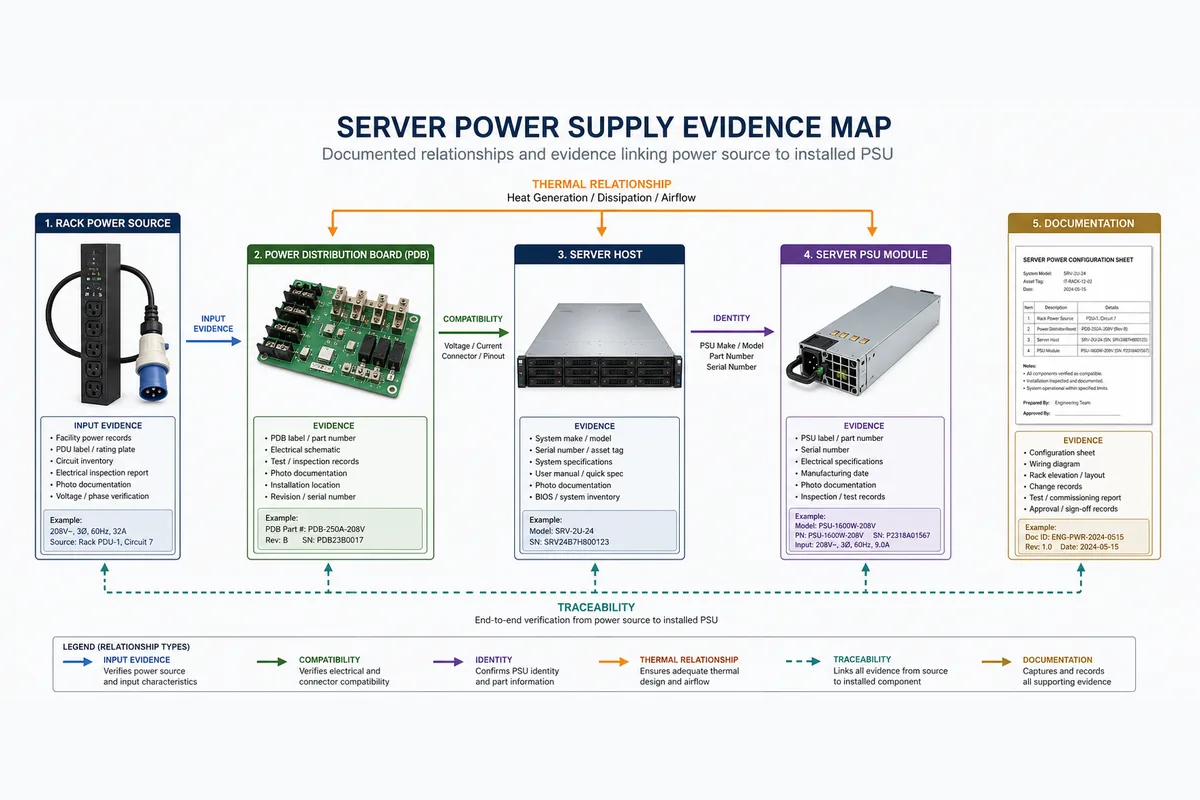
- manufacturer, model, revision, quantity, and supplied object;
- the server, cage, PDB, firmware, or custom assembly covered;
- ratings with their input, cooling, load, and environmental conditions;
- the source and revision for host, interface, redundancy, service, and lifecycle claims;
- gaps that block purchase, integration, or deployment, plus limitations that affect comparison;
- included hardware, accessories, permitted substitutions, receiving checks, and authorized use.
Use a narrow disposition such as “approved as the documented spare for the named server configuration” or “approved for prototype integration in the defined assembly.” Neither statement authorizes deployment beyond the documented operating envelope or an unspecified equivalent. Keeping identity, evidence scope, conditions, and unresolved limits attached to the line item makes “server grade” an auditable sourcing decision rather than a standalone reliability or compatibility claim.