A 500W 2U server power supply search often begins as a replacement problem for an older or specialized chassis. The wattage may be modest, but fit is complicated by rear-panel geometry, fixed versus removable construction, output harnesses, auxiliary rails and motherboard connector conventions. A generic ATX-looking unit or a similarly rated hot-plug module should not be assumed to replace the installed supply.
The shortest reliable path is to identify the existing power architecture before comparing products. Determine whether the server uses a fixed wired PSU, a removable module and PDB, or a proprietary assembly; then map its mounting, connectors, rail requirements, airflow and service constraints.
Begin with the installed 2U power architecture
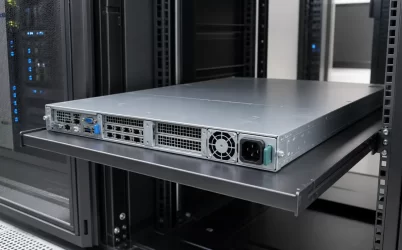
One rack unit provides very little vertical space, so the supply’s outer envelope is only the first dimension to check. Record the chassis width, depth, rear-bay height, mounting flange, insertion direction, latch position, and extraction clearance from the manufacturer drawing. A supply that is electrically capable may still fail because its rear connector collides with a cross-member, its latch cannot be reached, or its fan inlet is blocked by a neighboring component.
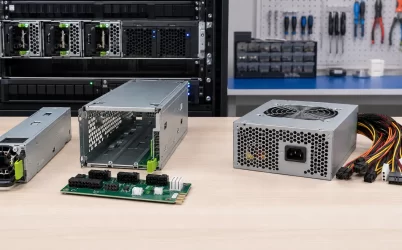
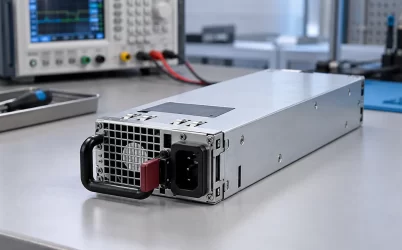
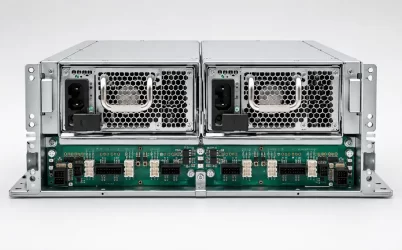
Also distinguish a true removable module from a fixed internal PSU. A hot-plug module normally relies on a cage, guide rails, a mating connector, and a power-distribution board. A fixed 2U unit may instead use a chassis bracket and a cable harness. These are different integration objects. Do not infer interchangeability from a similar length, a similar fan grille, or a seller’s use of “2U” in the title.
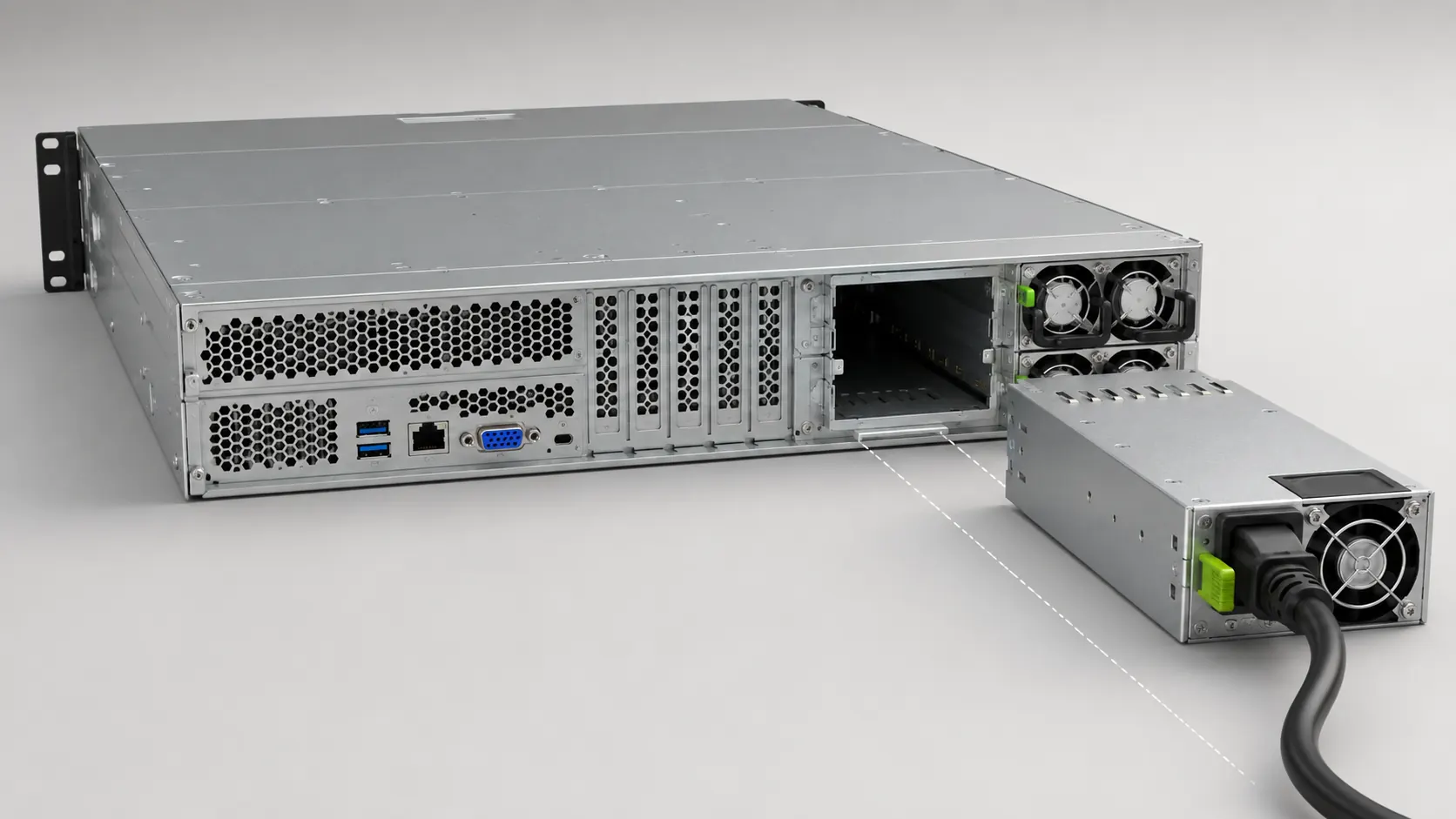
The drawing should show the complete installation boundary, not only the metal box. Check the AC inlet position, DC output connector, signal connector, cable bend radius, fastener access, and the space required to withdraw the module. If the supply is removable from the rear, the rack door, cable management arm, and adjacent equipment must not obstruct the service path. If the chassis uses a blind-mate connector, verify the guide features and insertion force specified for the mating assembly.
Rear-panel fit does not prove internal fit
A 2U chassis provides more height than a 1U server, but the PSU may still be constrained by drive cages, risers, fan ducts and motherboard position. Measure the complete body envelope, flange, screw pattern, inlet position, cable exit, connector reach and removal path. A unit that covers the rear opening can still collide internally or leave cables under tension.
Fixed supplies and hot-plug modules use different mechanical boundaries. A fixed PSU normally carries its own output harnesses and mounts directly to the chassis. A removable module usually mates with a cage or backplane that provides distribution and signal connections. Comparing these as interchangeable “500W server PSUs” ignores the hardware between the converter and the motherboard.
The output harness may define the replacement
Older 2U servers may require main-board power, processor power, storage power, fan or management connections, and auxiliary rails that are not described by total wattage. Record every installed connector from clear photographs and controlled documentation, including contact count, keying, wire gauge where known, cable length and destination. Do not infer a pinout from connector appearance alone.
The power allocation among rails matters as much as the total. A 500W unit with a strong primary rail but insufficient auxiliary capability can be unsuitable for a board that depends on those outputs. Conversely, a modern single-rail architecture may need a purpose-designed distribution board before it can serve a legacy multi-output chassis.
Adapters deserve particular caution. They can correct a mechanical connector family while leaving voltage assignment, sequencing, sense lines, standby power or current capacity unresolved. Use an adapter only when its complete electrical function and conductor rating are documented for the exact source and host.
Build the load estimate from the installed configuration
Replacement sizing should start with the server as configured: processor class, memory population, storage devices, add-in cards, fans and any powered peripherals. Observe boot and sustained application behavior where measurement is practical. Nameplate totals from every component can overstate coincident demand, while an idle reading can miss startup or recovery states.
Margin should have a stated purpose. It may cover measurement uncertainty, an approved storage expansion, fan aging or a defined workload excursion. A larger arbitrary multiplier can push the search toward a physically incompatible supply without improving reliability. The selected unit should support the credible load states inside its documented input and thermal envelope.
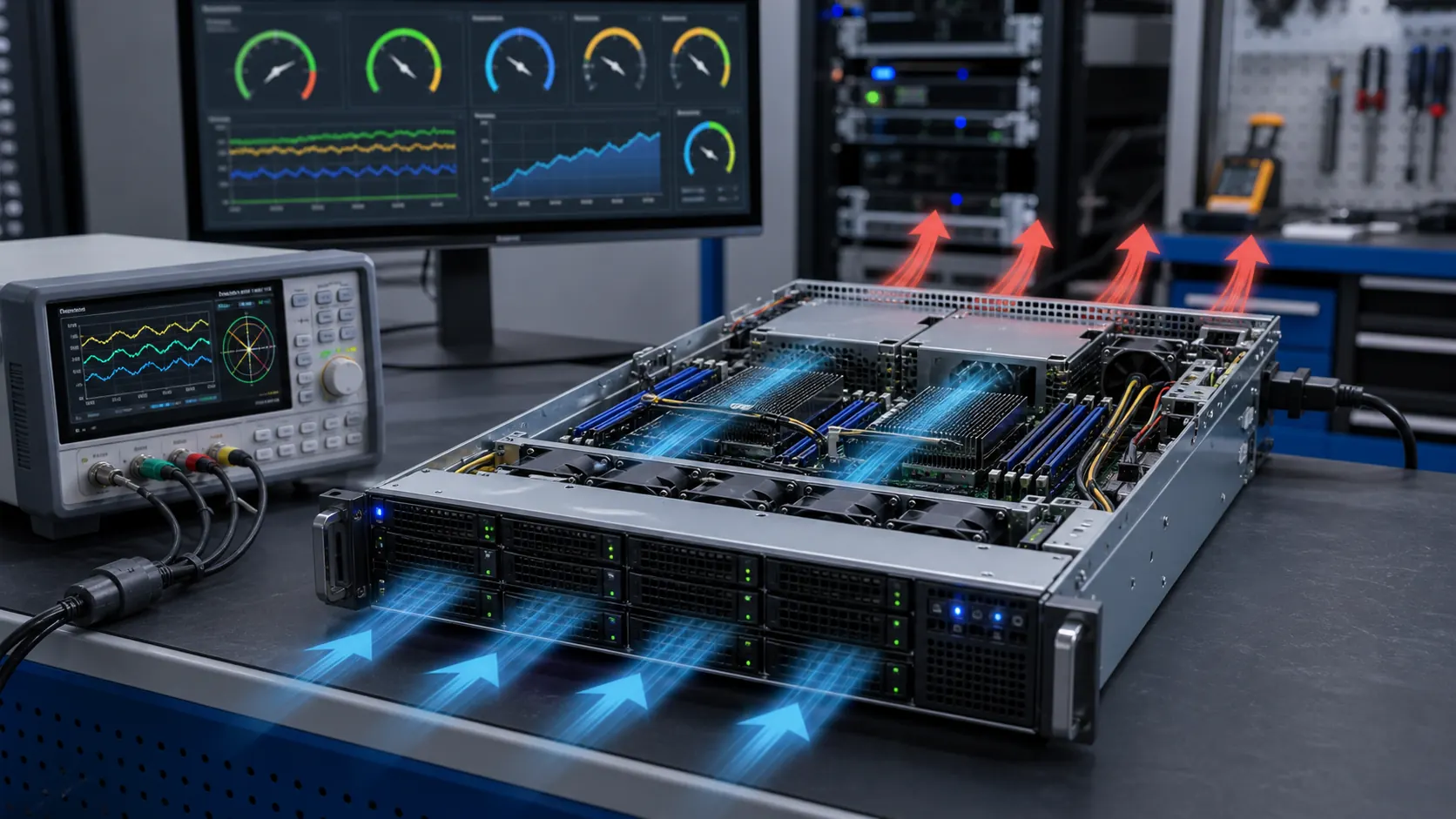
Where the installed PSU still operates, input measurement can help separate a capacity problem from another fault. Compare stable idle, boot, storage activity and the real application workload, but preserve the limitations of the instrument and measurement point. An AC reading includes conversion loss; it is not the same as DC load. A motherboard telemetry value may omit drives, fans or auxiliary devices. Use each observation for the boundary it actually measures.
Startup behavior can matter more than the average load in storage-oriented 2U systems. Several drives, fans and controllers may become active within a short interval. A replacement that supports the steady workload but reacts poorly to that transition can cause resets that resemble a motherboard or storage fault. The relevant evidence may be a supported host configuration, an exact-model transient specification or controlled testing of the completed server—not a generic claim that 500W exceeds the measured average.
Efficiency affects acoustics and component temperature
In a 500W class 2U server, conversion loss may be modest in absolute facility terms, yet it is still heat that the PSU fan and chassis airflow must remove. A replacement with a different fan curve or airflow direction can change noise and recirculation. Efficiency evidence should be tied to the exact model and expected load range rather than inferred from a seller’s category label.
Check the installed orientation and nearby obstructions. Cable bundles should not cover an inlet, and the exhaust should not discharge into a closed pocket behind the rack. If the original PSU participates in the chassis airflow plan, replacing it with a passive or differently controlled unit can affect components beyond the power supply.
Noise can be a useful symptom but not a qualification method. A replacement fan that runs faster may be responding to a different internal temperature model, a restricted inlet or a missing host control signal. A quieter unit may simply move less air. Evaluate temperature and airflow directly before deciding that either acoustic outcome is better.
Decide between repair, exact replacement and platform modification
An exact supported replacement preserves the original mechanical, electrical and management assumptions and is normally the lowest-integration route. A documented supersession may also be appropriate when the platform manufacturer defines the relationship. Used or refurbished units require condition, identity and warranty checks, but should not be treated as a different electrical design merely because of sales channel.
A platform modification becomes a design project. Replacing a proprietary fixed PSU with another architecture may require a bracket, harness, PDB, airflow change and revised protection. That work can be justified for a long-lived industrial or embedded server, but the integration evidence should be explicit and reproducible.
Repair sits between those options. Replacing a failed fan, capacitor or connector can preserve fit, but it changes the safety and reliability responsibility of the serviced unit. Mains-powered equipment contains hazardous energy and should be repaired only by qualified personnel using appropriate procedures and components. A successful bench start does not establish insulation, protection, thermal performance or long-term suitability.
Commercially, the decision should include downtime and future spares. A rare exact replacement may restore service quickly yet leave the platform exposed to the next failure. A controlled redesign may cost more initially but produce a documented harness and repeatable spare. The article’s search intent is replacement, so those lifecycle consequences are more useful than ranking products by headline wattage.
The replacement record should describe the physical object
The order line should name the manufacturer and exact part number, accepted revisions, whether the item is new or refurbished, included harnesses or cage hardware, airflow orientation, input requirement and target host. Photographs are useful for receiving inspection, but they do not replace electrical documentation.
Receiving inspection should compare the delivered label, connector set, cable lengths, mounting flange and airflow direction with the approved record before the old unit is removed. If the replacement arrives with a different suffix or harness, pause the installation until the relationship is documented. Discovering the difference on the bench is cheaper than troubleshooting it after the server has been returned to the rack.
Keep the removed PSU available until the replacement has completed the intended boot and workload checks. It provides a physical reference for connector orientation and can help distinguish a new power problem from an unrelated server fault. Disposal or return can follow once the installed unit and its identity have been recorded.
A successful 500W 2U server power supply replacement restores the original server functions without introducing a hidden connector, cooling or service mismatch. By classifying the installed architecture first, the buyer can compare like objects, preserve the necessary rails and harnesses, and avoid turning a straightforward spare purchase into an undocumented chassis redesign.