An 800W 2U single server power supply fits only when the exact model’s enclosure, mounting points, cable interfaces, airflow, input conditions, and service clearances agree with the target chassis. Current search results repeatedly identify the Athena Power AP-U2ATX80FEP8 as a documented candidate, but the terms “800W,” “2U,” and “single” do not establish compatibility by themselves. For an exact replacement, connect the offered part to the server’s approved configuration. For a new chassis integration, obtain enough model-specific mechanical and electrical evidence to evaluate every boundary between the PSU and the host.
This distinction is especially important in a product-heavy search. Retail pages can help locate inventory, but shortened titles, stock photographs, and copied specifications may omit the conditions that determine whether a PSU can be installed and used safely. The manufacturer record should control model-specific facts, while the host documentation must control claims about server support.
What “800W,” “2U,” and “single” establish
These terms are shortlist filters, not compatibility evidence. Each answers one narrow question while leaving the chassis interfaces unresolved.
| Term | Useful meaning | Does not prove |
|---|---|---|
| 800W | The exact model’s nominal output class under documented conditions | Output at every input voltage or temperature, rail loading, transient performance, or host support |
| 2U | A rack-height or PSU packaging association | Exact envelope, mounting pattern, rear-panel alignment, cable clearance, or bay fit |
| Single | One PSU rather than a multi-module redundant assembly for this article’s purchase scope | Hot-swap operation, live replacement, fault tolerance, or included accessories |
| Server PSU | The intended equipment category | Motherboard interface, pinout, airflow, management functions, or approval for a named server |
Treat 800W as a conditional rating rather than the server’s expected consumption. Treat 2U as an initial packaging filter rather than a dimensional replacement code. Treat “single” only as the architecture and purchase boundary used here; it does not authorize assumptions about service procedure or continuity during replacement.
Use AP-U2ATX80FEP8 as an exact candidate, not a generic pattern
The AP-U2ATX80FEP8 is the principal exact model appearing across the current results. The appropriate starting point is the Athena Power AP-U2ATX80FEP8 model page, because it is the primary source for specifications Athena explicitly assigns to that identity. A retailer listing may help establish price or stock at a particular time, but it should not override the model record when the two disagree.
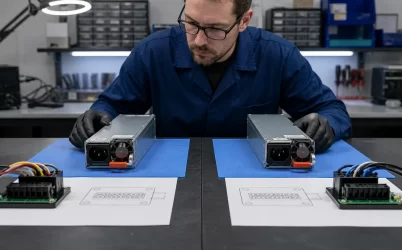
Record the complete manufacturer and model designation before interpreting any specification. Do not shorten the identity to “Athena 800W,” infer a pinout from a photograph, or accept an offer whose title contains the right wattage but omits the part number. Similar-looking 2U power supplies can differ in enclosure depth, fan placement, cable exits, output connectors, mounting flanges, or internal rail distribution.
Specifications should be transcribed with their conditions and source date. If a field is absent from the current manufacturer page, mark it unresolved rather than filling it from an unrelated product, marketplace snippet, or visually similar model. Useful unresolved fields may include:
- dimension tolerances and whether protruding features are included;
- mounting-hole coordinates and required fasteners;
- connector manufacturer and mating-part numbers;
- contact-level pin assignments;
- minimum cable bend radius or documented harness routing;
- airflow direction and inlet-temperature limits;
- output derating under different source or thermal conditions;
- host-platform approval and any required accessory kit.
An unresolved field does not automatically make the PSU unsuitable. It limits what the available evidence authorizes. A missing mounting drawing may be acceptable for an exact, documented replacement in the same host, while it can block a new chassis integration that depends on drilling, cable placement, or rear-panel fabrication.
The chassis fit depends on six physical and electrical interfaces
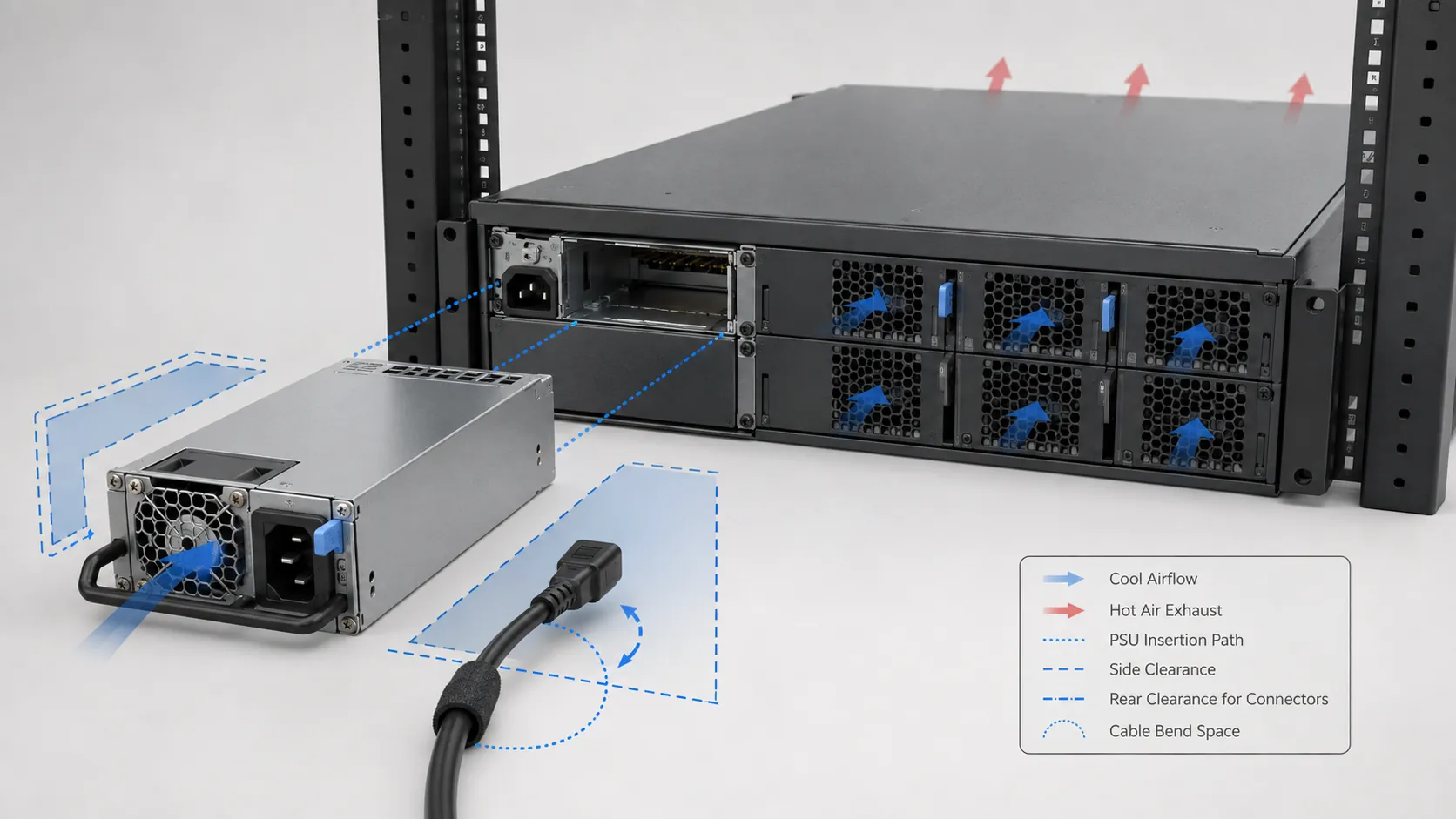
A useful integration record places the AP-U2ATX80FEP8 on one side and the target chassis on the other. Each row below represents a boundary that can independently prevent installation or operation.
| Boundary | Question the chassis must answer | Evidence needed |
|---|---|---|
| Occupied envelope | Is there clearance around the complete PSU body and every protruding inlet, fan guard, cable exit, switch, or flange? | Model-specific outline drawing and measured minimum chassis space |
| Mounting | Do the hole pattern, bracket position, supporting surfaces, and fasteners locate the PSU without distortion or interference? | Mounting drawing, chassis drawing, and applicable hardware details |
| Rear-panel interface | Can the inlet, exhaust, switch, and other externally accessed features align with the chassis opening? | Rear-panel cutout drawing and feature coordinates referenced to common datums |
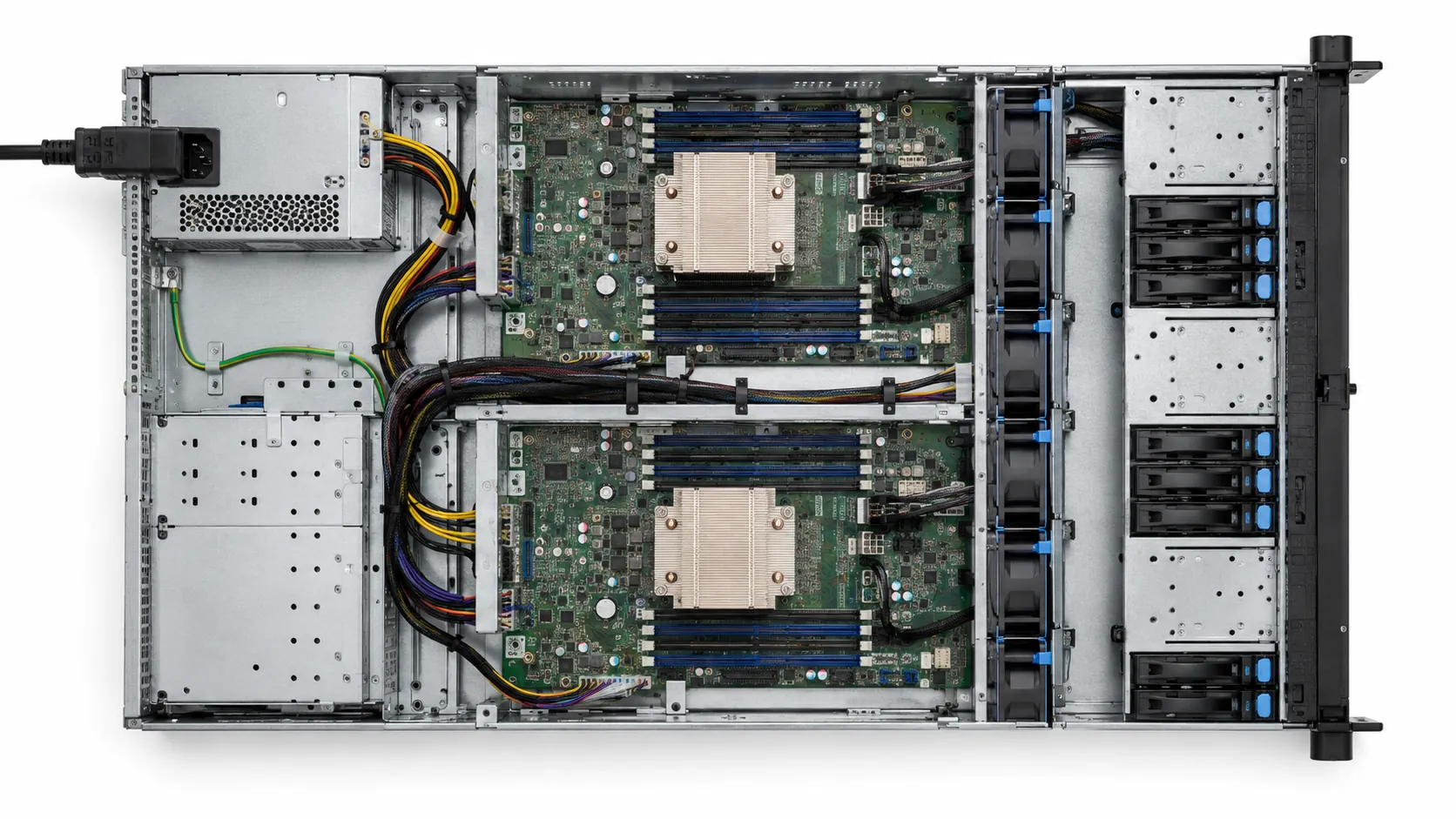
| Output harness | Do documented connectors mate with the intended loads, and can the cables reach without sharp bends, tension, or fan obstruction? | Harness schedule, connector identities, pinout evidence, cable lengths, and routing plan |
| Thermal path | Does the installed orientation provide the air source, direction, clearance, and temperature conditions required by the PSU? | PSU airflow information and chassis airflow model or test plan |
| AC input | Does the deployment source match the documented input envelope, inlet, cord set, branch protection, and grounding arrangement? | Exact PSU input specification and site electrical record |
Body dimensions are only the first spatial test
Three outside dimensions can eliminate an obviously unsuitable candidate, but they do not prove installation. The chassis must accommodate the PSU’s maximum occupied envelope, not merely its nominal metal box. Include fastener heads, inlet projections, cable exits, fan guards, labels that must remain visible, and any required ventilation space.
Reference the PSU and chassis from physical datums such as a mounting face, rear panel, base plane, or insertion stop. This prevents one drawing from measuring the enclosure body while another measures from a flange or connector. Powernexu’s method for creating a server PSU mechanical fit drawing explains how to combine envelope, datum, tolerance, and access information when a new chassis integration requires more than a dimension comparison.
Mounting must preserve alignment and service access
A PSU that fits between two chassis walls can still be unusable if its mounting pattern conflicts with a motherboard tray, storage cage, fan wall, or PCIe card. The bracket must support the supply in the intended orientation without twisting its enclosure or transferring excessive cable loads into a connector.
Reserve access for the tools and hand movements required to install or remove the unit. A screw hidden behind a motherboard or a cable latch blocked by the top cover can turn a nominally replaceable PSU into a chassis-disassembly task. If the host design expects rear extraction, the complete removal path must remain clear of rack rails, cable-management arms, and adjacent connectors.
Cable names do not prove electrical compatibility
For a cabled server PSU, the output harness is part of the interface rather than a generic accessory. A familiar connector shell does not establish its pinout, current allocation, sense wiring, control behavior, or mating compatibility. Even connectors commonly described by destination—motherboard, CPU, peripheral, or graphics power—can be implemented differently across proprietary systems.
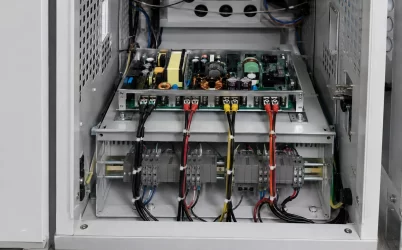
Create a connector schedule that identifies the PSU-side origin, cable or harness part, load-side destination, mating component, conductor allocation, and source of the pin definition. The broader server PSU connector mapping method is useful when a listing names connectors without supplying enough evidence to authorize connection. Do not energize a new integration while required contacts remain inferred from appearance.
Replacement and new integration are different purchase routes
Choose the route before treating the AP-U2ATX80FEP8 as orderable. An exact replacement restores a documented host configuration; a new integration creates mechanical, electrical, thermal, and service interfaces that the chassis designer must own.
Exact replacement in an existing server
Record the installed PSU label, server model, chassis revision, harness identity, and service documentation. Approve an offer only when its complete part number and applicable suffix or revision match a supported part or documented replacement. Similar wattage, dimensions, or connector appearance do not substantiate interchangeability; a changed bracket, harness, airflow direction, or pin definition reopens compatibility.
A server powered by one PSU has no second converter to carry the load during replacement. Unless the equipment documentation expressly authorizes another procedure, shut down and isolate the server before service.
New chassis or system integration
Obtain model-specific evidence for the occupied envelope, mounting pattern, rear-panel opening, grounding, harness routing, airflow, source protection, and service access. Prototype review should confirm that connectors remain accessible, cables do not obstruct cooling, the cover closes without conductor stress, and the PSU can be removed without disturbing unrelated hardware.
Before energization, verify the required rails, pin assignments, standby and control functions, grounding, startup behavior, transients, and protection coordination. Keep any absent model or host data unresolved rather than inferring it from an ATX-like appearance or a related PSU.
Preserve the rating conditions inside the chassis
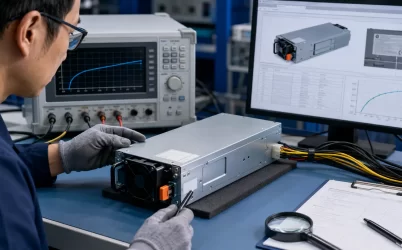
The 800W designation is meaningful only with the conditions attached to the exact model. Before using it in a server power budget, obtain the documented input range, output structure, applicable current limits, and any thermal or input-dependent derating. If the manufacturer does not publish a required condition, request clarification rather than assuming the headline rating applies universally.
Airflow is part of that operating envelope. Determine where the supply takes in air, where it exhausts, and whether nearby chassis fans create helpful flow or adverse pressure. Keep ventilation openings clear and account for recirculation from processors, accelerators, storage, or other rear-mounted equipment. A PSU can occupy the available volume yet operate outside its intended thermal conditions if a bulkhead blocks its inlet or hot chassis air is returned to it.
The AC path also belongs to the fit assessment. Match the documented input requirements to the intended rack or facility source, then identify the inlet and approved cord arrangement. Confirm that the branch circuit, rack PDU, protective devices, grounding, and connector ratings are suitable for the installed equipment. Do not calculate AC input current from 800W alone without the applicable source voltage, efficiency, power factor, and operating load.
Make the quotation name the configuration that was evaluated
A useful request for quotation should prevent a correctly researched model from becoming an unspecified equivalent during purchasing. The line item should state:
- Athena Power AP-U2ATX80FEP8 as the requested candidate, including any required revision or suffix;
- whether substitutions are prohibited or require written technical review;
- quantity and whether the shipment is one complete PSU or includes separate accessories;
- all included output cables, brackets, fasteners, cord sets, and documentation;
- the applicable mechanical drawing and connector or harness documentation;
- the rating conditions supporting the quoted output;
- condition of the unit, warranty terms, and traceable seller identity;
- price, lead time, and availability stated separately from technical compatibility.
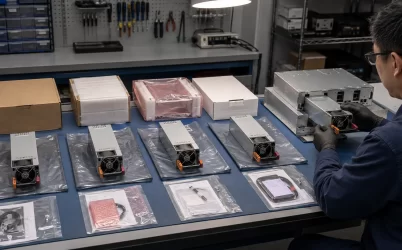
At receiving, compare the delivered label with the purchase line before installation. Inspect the enclosure, inlet, fan openings, harnesses, connector keys, cable condition, mounting features, and included parts. A different suffix, revised harness, missing bracket, or altered connector should reopen the affected fit question rather than being accepted because the unit still carries an 800W description.
A fit verdict should have one of three scopes
Approved exact replacement means the complete delivered identity is supported for the named server configuration and the existing mounting, harness, source, and cooling arrangement remain applicable.
Candidate for new integration means the AP-U2ATX80FEP8 has passed initial capacity and packaging screens, but chassis-specific mounting, cable, thermal, electrical, or host-function work remains. This status can authorize drawing review or prototype engineering without implying production compatibility.
Hold or exclude is appropriate when the seller cannot identify the exact product, necessary drawings or pinout evidence are unavailable, the chassis cannot preserve required clearance or airflow, or the input and output conditions do not match the system. Missing evidence should remain visible rather than being converted into an assumed feature.
The practical outcome of searching for an 800W 2U single server power supply is therefore not a universal 800W replacement. It is a controlled answer about whether one exact AP-U2ATX80FEP8 can occupy, connect to, cool within, and be serviced in one named chassis. That answer gives purchasing a defensible model identity while keeping unsupported compatibility claims out of the order.