A 1300W Titanium server PSU is often considered when a server moves beyond a conventional compute population into dense storage, high-speed networking, or accelerator-heavy work. The useful decision is not “does the system need 1300W?” It is “under what electrical, thermal, and redundancy conditions can this exact platform use a 1300W module as intended?” That distinction prevents a high nameplate rating from hiding an incompatible bay, inadequate input path, or an untested post-fault operating state.
Define the operating envelope before selecting the supply. It should include the exact host, PDB, module revision, intended input service, ambient condition, hardware population, workload policy, and redundancy condition. If any one of those changes, the previous capacity conclusion may need review.
The nameplate is the start of the constraint, not the answer
A 1300W Titanium PSU can be appropriate only when the exact product documentation supports the intended input and environmental conditions, and when the server chassis and PDB are approved for that module. For 1+1 systems, assess the complete workload on one surviving PSU, not the combined labels of both supplies. Verify source-feed separation, airflow, event reporting, and the system’s power-management behavior after a module or feed failure. Efficiency is relevant to conversion loss, but it is not evidence of compatibility or protected capacity.
Draw the load window the server must occupy
A server rarely operates at one stable power value. It starts, initializes devices, changes fan speed, services storage, responds to network traffic, and may boost or limit processors and accelerators under policy control. Create a record of the installed hardware and the operating states that matter to the business service. Include boot, expected sustained workload, known transient conditions, and the defined state after one power module or source path is lost.
Use measurements and platform telemetry for the boundary each tool actually represents. An AC meter includes conversion loss and upstream effects. A BMC reading may show selected internal domains. Neither should be treated as complete proof alone. The aim is a credible bounded profile rather than a falsely exact estimate. Record the input condition, sampling context, hardware revision, and active policy with every result.
Margin should have a stated purpose: a documented expansion, measurement uncertainty, a controlled workload transition, or an allowed thermal condition. An arbitrary multiplier can send selection toward a module that the platform cannot physically or electrically support. A lower number without fault-state evidence can create the opposite problem.
Input service can redraw the whole window
Output capability may depend on the specific input service documented for the module. Confirm the nominal voltage, allowed range, cordset, PDU outlet, branch arrangement, and source topology for the actual installation. Do not infer that a module reaches its highest rating from a different regional supply or a generic specification table. The data center or equipment owner should approve the source arrangement that the server will actually use.
For redundant systems, trace both feeds upstream. Two modules on the same PDU, breaker, or transfer path can tolerate a module fault but remain exposed to the shared source. Where the requirement calls for feed redundancy, identify A and B paths, label them, and preserve that assignment after service. The server’s rear panel cannot prove independence by itself.
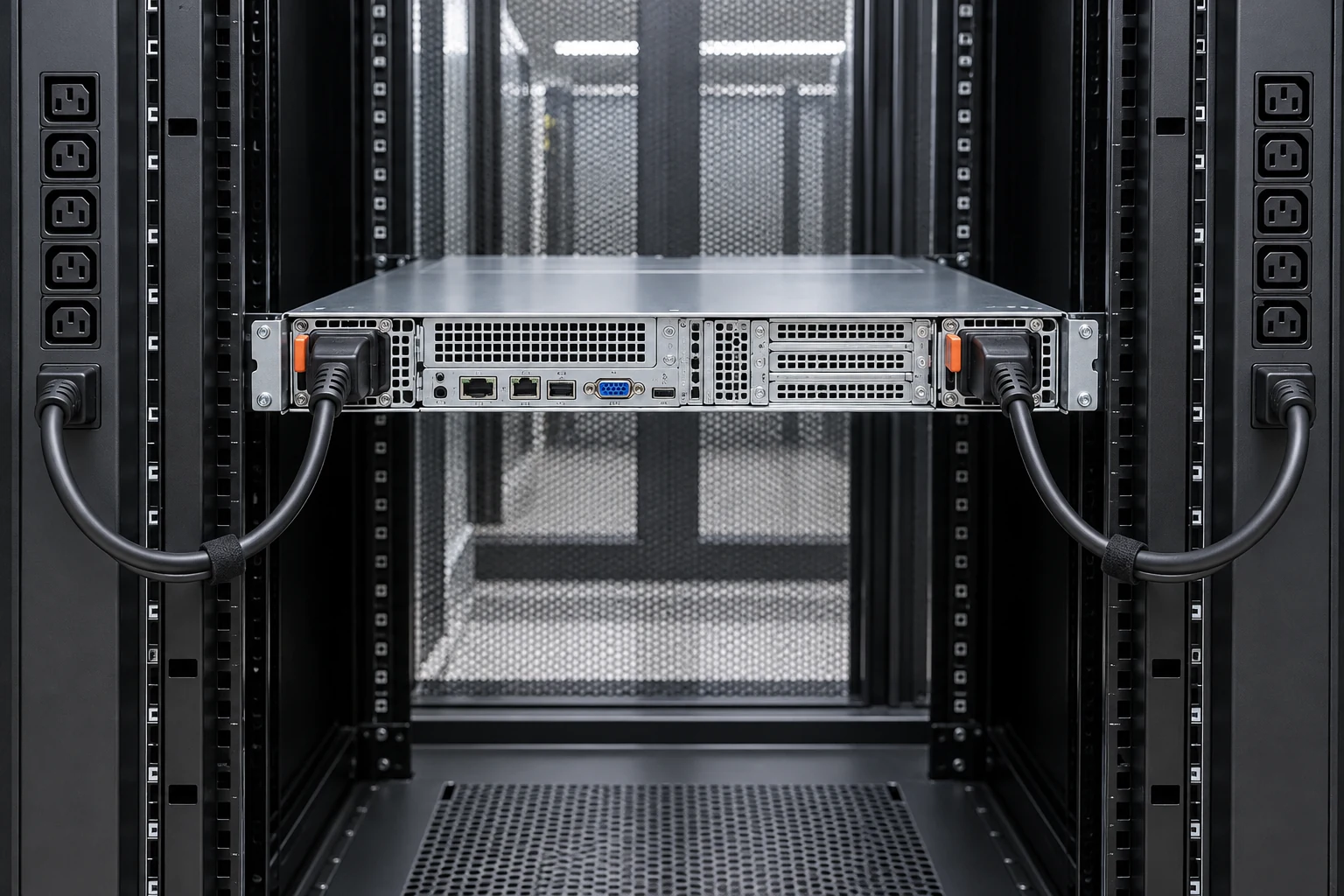
The 1300W module still has to belong in this chassis
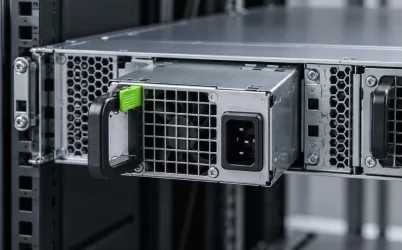
Server PSU modules work with a mechanical bay, guide features, blind-mate contacts, and a PDB. These parts may carry high-current output, standby power, enable signals, telemetry, sequencing, and fault indications. Verify the exact approved part, not only the nominal wattage, outer dimensions, or a photo of the fan grille. A visually similar module may not seat correctly, may report incorrectly, or may require a different mating connector.
For a replacement, collect the installed PSU label, host and chassis identifier, PDB identifier, firmware context, input arrangement, and approved replacement evidence. For a new integration, add drawings, connector documentation, expected rails, control requirements, and thermal conditions. This evidence should travel with the service record and spare inventory.
Efficiency is evidence about loss, not a compatibility shortcut
The Titanium designation is an efficiency classification for a tested model under defined load points and input conditions. It is not a universal thermal, capacity, or interoperability promise. At a given DC load, a more efficient conversion stage can reduce the difference between input and output power. The actual benefit still depends on load profile, inlet air, upstream distribution, and fan behavior in the completed server.
Keep efficiency claims tied to the exact module and supporting documentation. Generic family pages, reseller headlines, or an unverified label photograph should not be used to establish certification, output capability, or a safe operating temperature for a particular revision.
Look at the rear bay after the server becomes a real server
A 1300W-class module can be installed in a compact rear bay with a tightly managed airflow path. Verify fan zoning, blanking requirements, cable routing, inlet temperature, and removal clearance in the populated chassis. A missing blank or changed component population can alter the path that cools the supply. Bench behavior with an open cover is not a substitute for the installed enclosure.
During qualification, inspect physical seating and latching, review platform events, and observe the temperature conditions relevant to the module documentation. Investigate unexpected fan behavior, module-present alarms, or uneven status reports even if the server remains available. These are integration signals that can matter during a later fault.
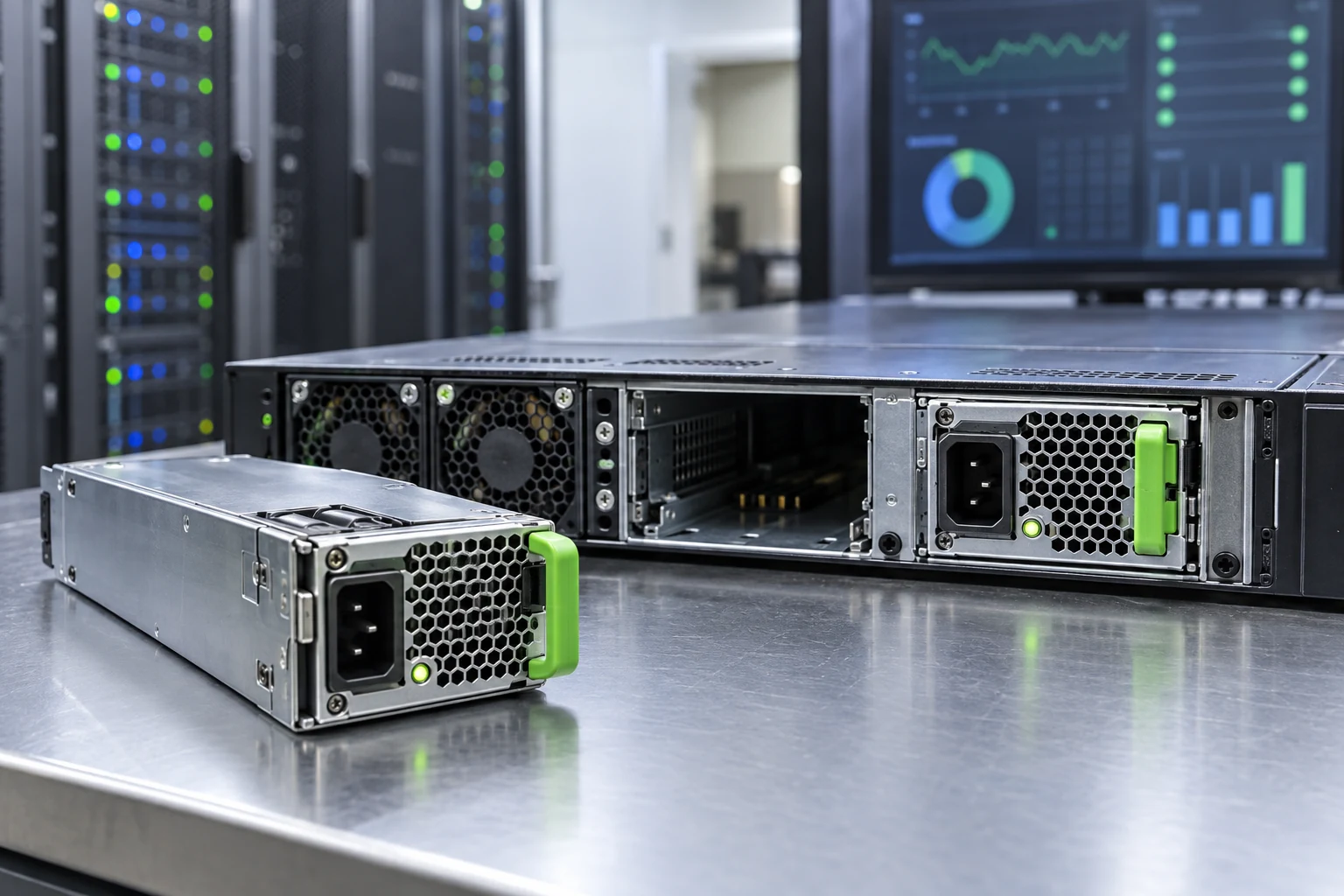
Translate the failure test into a service decision
Where authorized, validate the failure state that the service promise requires. Confirm the healthy companion module and source before removing or isolating one path. Observe workload behavior, management alarms, sharing status, and recovery after restoration. If the platform deliberately reduces performance, make that policy visible to the workload owner and operations team.
Service records should state the approved spare, input path, module identity, firmware guidance, and required checks after insertion. A hot-swap action becomes safer when technicians know whether the system is allowed to run at its current load on one module and how to verify that both source paths have been restored.
Use the gap between normal and fault-state load deliberately
The difference between normal shared loading and the one-module condition is where many capacity discussions become misleading. A server may look lightly loaded when both PSUs share demand, yet operate close to a limit after one path is lost. Conversely, a platform may intentionally reserve enough capacity to maintain full workload. Neither arrangement is inherently right without a stated availability objective. The important point is to make the objective visible in the power policy, operating procedure, and acceptance record.
For example, a compute node may be permitted to throttle accelerators after a supply fault while retaining control-plane access and preserving work. A storage system may instead require continued full performance during replacement. These are different engineering targets. The PSU selection, module count, workload cap, and facility feed arrangement should all support the target chosen by the system owner. Avoid describing a throttled fault state as full redundancy simply because the server remains online.
Watch for changes that silently invalidate a previous decision
Power requirements change as systems evolve. Additional memory, faster network adapters, different storage devices, new accelerator firmware, altered fan curves, and changes to host power limits can move the load window without changing the chassis or PSU part number. A maintenance record should identify which changes require a review. That is more useful than treating the original wattage selection as permanently valid.
Revalidation does not always require an exhaustive lab campaign. It can begin with a controlled comparison of the changed configuration against the original operating profile, followed by targeted review of input, thermal, and post-fault conditions. Escalate to the host manufacturer or qualified test process when the changed condition falls outside existing documentation. This approach keeps the power design connected to the hardware actually deployed over the server’s service life.
Procurement should receive the same boundary information. A purchasing description that lists only “1300W Titanium” invites substitutions that may be electrically plausible but unsuitable for the installed PDB, management interface, or airflow path. Include the approved module identifier, host family, and any relevant revision constraints in the controlled spare record. On receipt, compare the delivered label and mechanical configuration with that record before it is stocked or installed. This small control step reduces the chance that an emergency repair becomes an uncontrolled platform change.
For related platform planning, see server power supply wattage and dedicated server power supply paths. These resources provide context, but exact host documentation remains the authority for a module replacement or new build.
What the release record needs to preserve
- Exact PSU, bay, and PDB compatibility evidence.
- Documented input service and A/B source assignment.
- Installed hardware and workload profile.
- Thermal and airflow conditions in the final chassis.
- Authorized fault-state validation and event review.
- Controlled spare and maintenance procedure.
The right 1300W Titanium server PSU is not simply the highest-capacity module that can be purchased. It is the documented module whose operating envelope matches the complete platform and whose failure behavior has been understood before it is needed.