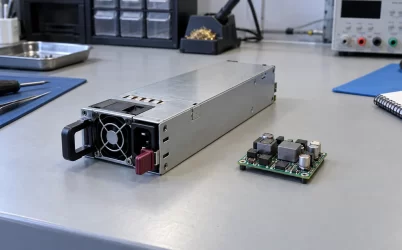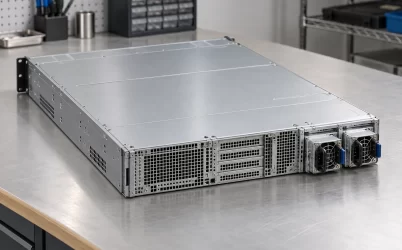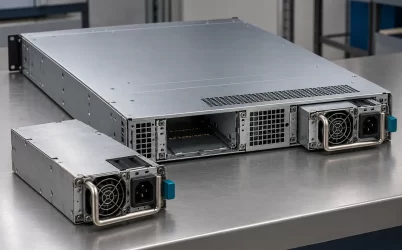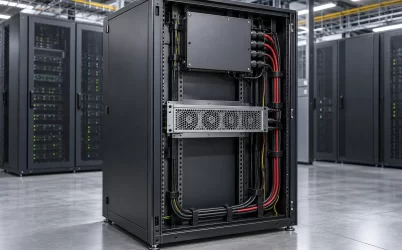
Open-frame and enclosed power supplies can perform the same electrical job, yet they place very different demands on the equipment around them. An open-frame supply exposes its board and components because another product is expected to house it. An enclosed supply has its own metal cover or chassis, although its terminals, vents, mounting and electrical connections still require a suitable installation. The practical question is not which style is intrinsically better. It is which parts of the finished power installation the equipment designer wants the supply assembly to provide, and which parts the host machine can provide reliably.
That distinction matters when two candidates have similar output voltage and power. The board that fits inside a compact instrument may be awkward in a service-accessible cabinet. The metal-cased unit that mounts conveniently in a panel may be too large for an embedded product. Neither package tells you whether input range, output regulation or approvals match the final use.
What the two packages physically include
An open-frame AC-DC supply is a converter assembly whose components remain accessible around the board. It may be supplied as a bare PCB or with a base plate. An enclosed chassis supply adds metalwork around more of the converter. Between them sit U-frame designs that wrap a base around two sides; the category names describe construction, not universal dimensions. Bel’s power-supply FAQ defines these as variants of chassis-mounted internal supplies and distinguishes them by how much of the top and sides the metalwork covers.
“Enclosed” does not mean sealed. A perforated cover may allow dust and air to pass; terminals may remain reachable inside a cabinet. Nor is an open-frame product an unfinished circuit: the converter can have its own insulation, controls and protection functions while depending on the host for its surroundings. Ask what a person can touch, where air enters, which surfaces support the assembly, and how wiring leaves it.
If an industrial controller has an internal electronics compartment with a defined mounting plane, an open board may occupy a recess near its load. If the converter sits on a shared backplate inside a machine cabinet, a covered chassis can keep tools and adjacent wire looms away. The cabinet still has to manage access and wiring.
Follow the available space, not the catalog footprint
A board can look smaller on a dimensional drawing than a metal-cased supply with the same output class. It does not follow that the installed open-frame solution takes less room. The host may need standoff height, an underside exclusion zone, space for input and output plugs, a protective barrier, and clearance for airflow. A cover can similarly add height yet allow the complete supply to sit on an already available backplate without a separate guarded subcompartment. Compare installed volumes, not bare width multiplied by length.
Consider a shallow communications appliance with a removable top. The board-level supply can share the appliance’s intake-to-exhaust path and use the existing lid as its outer boundary. That is a meaningful packaging advantage if the load PCB, cables and lid are arranged around the converter. Put the same board in an open maintenance bay and an additional barrier may erase the advantage. Conversely, a perforated metal supply can be mounted to a cabinet panel with a predictable external shape; it may not fit under the appliance’s low lid or align with its fan path.
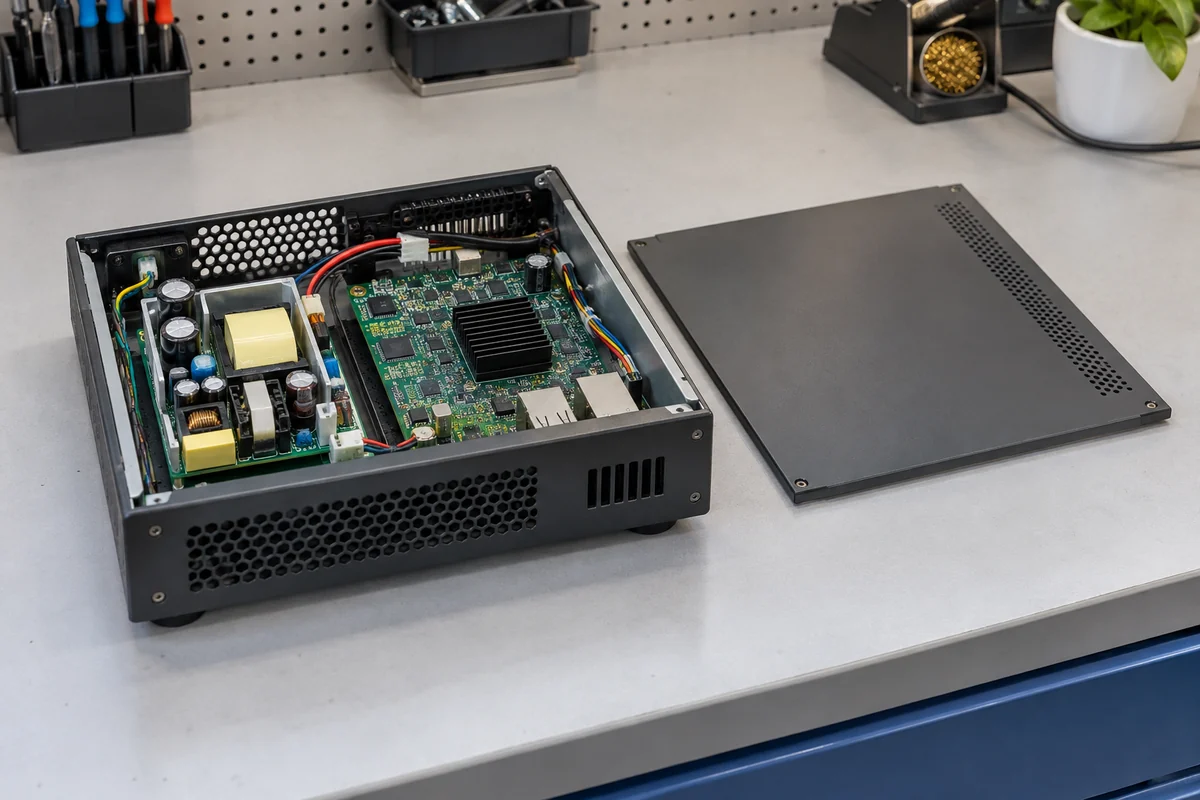
Mounting orientation is part of that geometry. A board that appears to fit flat may place its tallest transformer under a brace or leave too little room to release a connector. A cased unit’s listed length may exclude the bend radius of an AC cable. Inspect the mechanical drawing and connector approach direction.
Air crosses different boundaries
Open-frame construction allows the host’s air to reach components directly, provided the host really moves air through the board rather than around it. A covered supply channels air through its vents or fan arrangement, but a metal shell can also obstruct a host duct or recirculate exhaust if placed badly. Neither package guarantees adequate cooling. The relevant operating condition is the air and temperature at the converter in its installed position.
This is where a side-by-side comparison must remain conditional. A board may carry a higher rating when a stated airflow passes over designated components; another rating may apply without forced air. A metal-cased model can have its own fan, rely on cabinet convection, or require an external airflow path. Some cases conduct heat into a mounting surface; others are predominantly ventilated covers. The words “open” and “enclosed” do not choose among these methods. Compare the two exact datasheets at the planned orientation, inlet temperature and operating load.
In a sealed host, heat produced by either converter remains inside the host unless the enclosure moves it to the environment. Removing a cover from the PSU does not remove those watts. Inside a ventilated machine, the open board may benefit from the common system fan but become sensitive to a new cable bundle placed across the flow. A covered unit may be less sensitive to that local obstruction and more sensitive to blocked cover perforations. The best arrangement is the one whose thermal path survives the equipment’s actual assembly and maintenance states.
Do not infer an efficiency advantage from package style. Conversion efficiency belongs to the electrical design and test point; a cover changes how the resulting loss is distributed and removed. Where converter losses become enclosure heat requires a separate load-point calculation. In a format comparison, first find out whether each candidate can run continuously in the space available.
The host enclosure does not disappear when a PSU has a cover
For an exposed board, the equipment around it normally supplies the barrier against ordinary contact, mechanical protection and space around hazardous circuits. That obligation is easy to visualize: opening the host can expose the converter immediately. An enclosed supply contributes its own metalwork, but the host still determines whether a user or technician can reach terminals, whether loose metal can enter a vent, and whether the selected mounting and wiring arrangement meets the finished equipment’s requirements. A vented cover is not a substitute for the host’s access design.
The distinction also affects how the product is assembled. With an open frame, a technician installing a nearby board or cable can brush past the power assembly unless the sequence and mechanical layout prevent it. With a covered unit, the PSU’s shell provides a physical separation from neighboring components, yet its input terminals may remain exposed until the cabinet wiring is completed. Protective-earth and isolation arrangements depend on the exact supply and end product, not on the cover’s appearance. A metal enclosure should never be assumed to make every installation Class I, and an open PCB should not be presumed to lack an approved insulation design.
A clean comparison identifies the boundary that each design actually supplies. Is there a host lid that remains in place during normal operation? Can service personnel remove a panel while another section stays energized? Are the input connections guarded after installation? Does the PSU case form an intended part of the protective path, or is it only a mechanical cover? These are installation-specific facts. They should be checked against the exact manufacturer’s instructions, rather than turned into a universal claim that one format is “safe” and the other is not.
Wiring and assembly labor can reverse the apparent cost
An open board may have headers or terminals positioned for short, direct connections to the host’s electronics. In volume OEM equipment, that can reduce harness length and let the converter occupy a carefully controlled board zone. It can also create more integration work: choosing mating connectors, retaining cables, arranging insulation and documenting an assembly sequence that avoids damage. The purchase price of the PCB is only one part of the installed cost.
A cased supply may offer accessible screw terminals and mounting holes that suit cabinet work. This can speed a machine build where power wiring arrives from a terminal strip. It may instead require longer DC cables to reach an embedded load, producing additional voltage drop and another set of cable supports. The package changes the routing problem; it does not solve it automatically. Connector type, allowed wire size, strain relief, terminal accessibility and the location of the load often matter more than a small difference in metal content.
For a concrete comparison, Powernexu lists a 70 W, 12 V open-frame model intended for installation within an OEM enclosure and a separate 75.6 W, 12 V enclosed model with a metal chassis and screw-terminal connection. They illustrate the two physical formats in a similar low-power output class. They are not interchangeable substitutes: their rated powers, input specifications, physical drawings and installation conditions must be assessed individually. The example is useful precisely because the shared 12 V output does not decide the packaging question.
Service changes what “accessible” means
During manufacture, exposed components may be easy to inspect and the board can be fastened before the rest of the equipment is closed. In the field, the same accessibility can be a liability if a service technician must move unrelated cables to reach it. A metal-cased supply can present a more bounded replacement assembly with visible fasteners and terminals. Yet its cover does not mean it is hot-swappable, nor does it make disconnection safe without the correct shutdown procedure. Serviceability follows the whole host design.
Imagine a panel-mounted controller that can be shut down and isolated for maintenance. A covered PSU may be replaced without dismantling the controller’s logic board. In a compact network endpoint, a board mounted beside the main electronics may be replaced as part of the whole internal assembly; a separate chassis would introduce screws and wiring that gain little. The trade-off depends on expected replacement practice, spare-part strategy, and the skill of the person allowed to open the equipment. It cannot be read from “open frame” or “enclosed” alone.
Contamination is another field reality. A covered but vented unit can still admit dust, conductive debris or moisture. An exposed board may be acceptable inside a clean, well-controlled sealed product, while a perforated cased supply might be unsuitable in a dirty cabinet without additional environmental protection. Do not confuse a metal cover with an environmental ingress rating. If a rating is essential, use a specific, documented enclosure design and verify what the rating applies to.
When the same electrical class leads to opposite choices
Take two systems that need a modest internal 12 V supply. The first is a purpose-built instrument with a sealed electronics housing, one planned power-board location, an established assembly process and a fan that already cools the neighboring load. An open-frame module may integrate naturally: its host supplies the physical boundary, and the design team can route short connections and check temperature at the actual board. Adding a second metal shell may waste scarce space without adding a useful service function.
The second is a machine cabinet assembled from several purchased modules. Technicians work near its wiring, and the PSU may need to be changed without disturbing a custom embedded PCB. An enclosed chassis with mounting points and accessible terminals can define a clearer replacement unit. The cabinet still needs appropriate isolation, cable management and ventilation. The preference for the cased format arises from how that cabinet is built and serviced, not from an assumption that metal improves output quality.
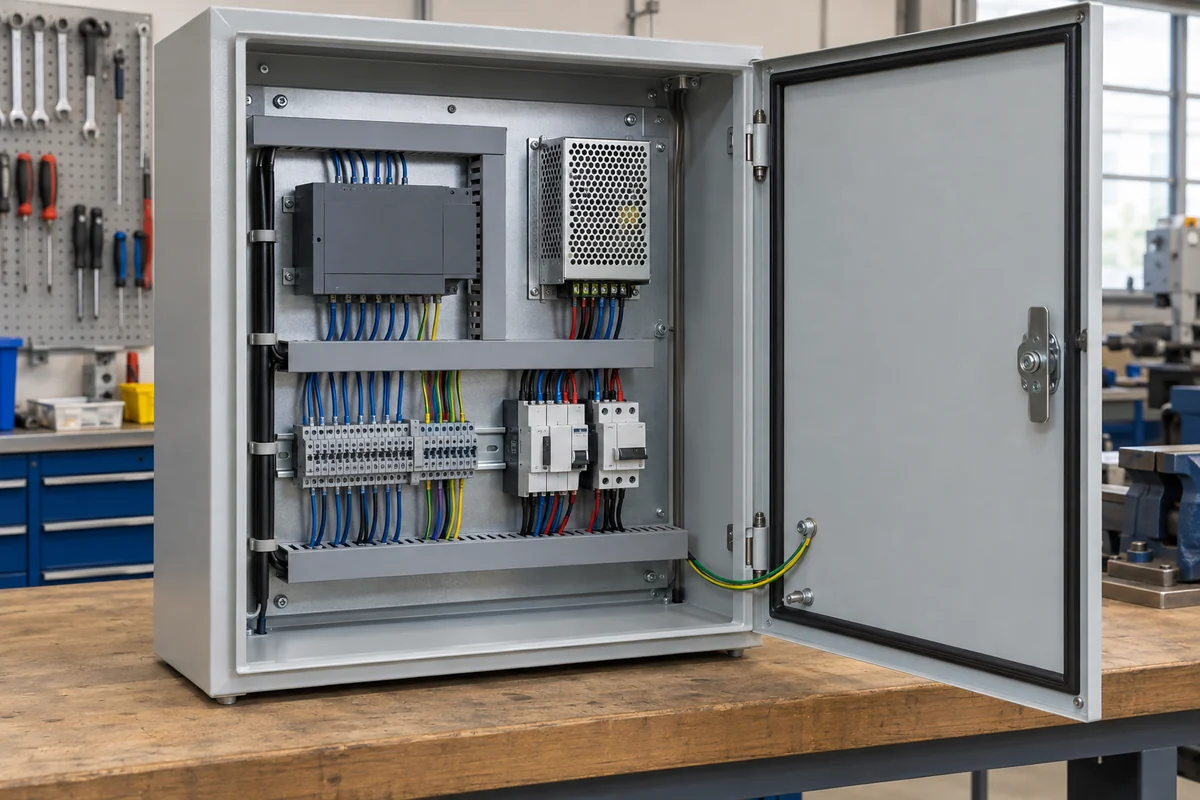
There are counterexamples. A cabinet can contain an open-frame board behind a dedicated internal guard; an integrated appliance can use a compact cased PSU if its airflow and geometry fit. The meaningful comparison is between two complete installations: converter plus host barrier, mounting, wiring, cooling and service access. Once those pieces are drawn together, “open frame versus enclosed” stops being a superficial product-style question and becomes a choice of where the equipment’s physical responsibilities reside.