A multi-site purchase of a 2000W 54.5V CRPS power supply can produce different decisions for different destinations. One facility may require more output than the applicable listed maximum. Another may operate at voltages the available rating record does not cover. A third may clear that initial comparison while still needing manufacturer operating limits and host approval. Keep those outcomes separate before committing the order. The useful purchasing document connects each site’s required voltage envelope and load to the exact offered model, identifies what the evidence establishes, and assigns unanswered questions to someone who can resolve them.
Read the two documented bands without filling the space between them
The official EESS public database provides a concrete example. Search certificate GMA-515447/00 and equipment profile 163 for G1482-2000WNA in the EESS public search. The equipment entry lists 54.5 V DC, 18.35 A, and 1000 W maximum for 100–127 V AC input. It separately lists 54.5 V DC, 36.7 A, and 2000 W maximum for 200–240 V AC input. These are regulator-record maximum ratings, not measured operating results.
The two entries establish different output ceilings within separately stated input bands. They do not establish an output allowance between 127 V and 200 V AC. A buyer cannot join the entries with a straight line, carry the 1000 W figure across the gap, or assume that the 2000 W entry begins somewhere below 200 V. Each would add an operating rule absent from this record.
Keep the listed power ceilings as written. Multiplying rounded voltage and current entries does not authorize a slightly different power allowance. For this purchasing comparison, the explicit 1000 W and 2000 W maximum entries control the rating screen. Their presence also does not establish continuous-duty capability under an unspecified temperature, airflow, or installation condition.
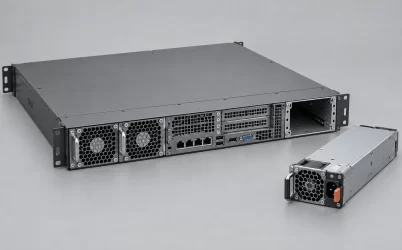
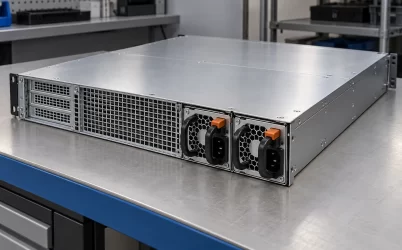
The G1482-2000WNA catalog entry identifies the Powernexu sourcing reference used in this example. The rating figures discussed here come from the exact-model EESS equipment entry. A catalog identity helps connect an inquiry to an offered part; additional operating claims require their own applicable evidence.
EESS identifies its database entry as something other than a copy of the original certificate. This article uses the equipment profile to attribute the listed ratings. It makes no determination about safety approval, permission to sell, or installation authorization. The same record supplies no basis here for DC-input capacity, standby behavior, protection response, connector fit, or supported host equipment. Those questions need different documents rather than a broader interpretation of these two bands.
Give every destination an envelope and a defined demand
A multi-site order needs a separate destination record even when every carton carries the same ordering code. Record the voltage required at the equipment input, the relevant load states, and the conditions those observations represent. A facility name followed by “120 V” or “230 V” is too coarse for a comparison whose result can change at a documented band boundary.
Distinguish an observed envelope from the envelope the installation must accommodate. Measurements describe the conditions captured during the observation period. Facilities engineering must determine whether that period represents all required sources and operating states. If a deployment must also work from a transfer source, that source belongs in the requirement even when the ordinary utility feed has behaved consistently.
The numerical sites below are entirely hypothetical. Their voltage ranges represent fictional measurement records that the example’s facilities owner has accepted as the required envelopes. They are not Powernexu measurements, customer installations, or test results for G1482-2000WNA. Actual procurement needs a justified site requirement; a short observation alone cannot establish every future condition.
Define demand at the same boundary as the output rating. Here, required watts mean DC demand at the module’s main output. They do not mean wall consumption, downstream delivered power, or a sum of unrelated equipment labels. The equipment owner must provide the relevant demand requirement and explain which operating states it includes.
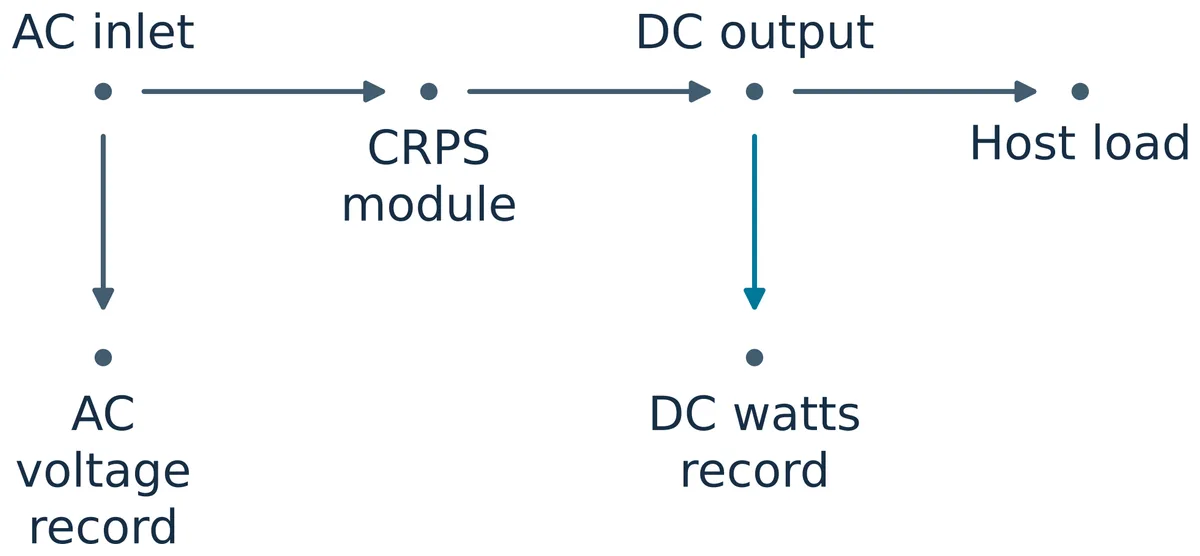
A lumpy workload particularly needs that explanation. Suppose a fictional installation spends much of its time at 850 W but requires 1200 W during recurring operating periods lasting several minutes. Its purchasing requirement includes 1200 W. The 850 W average cannot replace that requirement simply because it occupies more time. These assumptions describe a required load state; they establish no overload duration or transient allowance for the example module.
Keep a reference to the underlying demand description beside the upper requirement. A table cell saying “1200 W required” is much more useful when its owner can explain whether that value covers a recurring workload, startup, or a permitted capped configuration. Different requirements can need different manufacturer evidence, even when their largest wattage happens to be identical.
Compare five hypothetical sites without collapsing their outcomes
The following procurement evidence grid applies only the two listed EESS rating bands to fictional site requirements. It compares one candidate at five destinations, rather than ranking different products. “Initial rating screen” means that the stipulated voltage envelope is contained within a listed band and required demand is below its listed maximum. It does not approve operation or purchase.
| Hypothetical site requirement | Applicable record evidence | Purchasing consequence | Decision owner and next evidence |
|---|---|---|---|
| Site A: 114–124 V AC; 850 W typical, with recurring 1200 W required periods | Entire voltage envelope lies within 100–127 V AC; listed maximum is 1000 W | Fails the stated 1200 W requirement | Equipment owner must change the requirement through an approved configuration or evaluate another documented candidate |
| Site B: 180 V nominal; required envelope 174–188 V AC; 900 W required | No output rating is established here for this interval | Pending input-dependent output evidence | Supplier must obtain an exact-model manufacturer specification covering 174–188 V AC |
| Site C: 208 V nominal; required envelope 196–216 V AC; 1500 W required | Only 200–216 V lies inside the listed 200–240 V AC band | Pending evidence for the uncovered portion | Facilities owner confirms the required envelope; manufacturer must document output across its full extent |
| Site D: required envelope 218–238 V AC; 1750 W required | Entire envelope lies within 200–240 V AC; listed maximum is 2000 W | Clears the initial rating screen only | Equipment engineering must obtain operating, thermal, and host evidence before authorization |
| Site E: required envelope 232–246 V AC; 1600 W required | The portion above 240 V is outside the listed bands | Pending evidence for the upper excursion | Facilities and manufacturer must resolve the 240–246 V requirement before candidate approval |
Site A has an identified rating conflict. Its entire stipulated voltage envelope lies within a documented band, but its required upper load state exceeds the corresponding 1000 W maximum. That supports rejecting this candidate for the unchanged requirement. It does not predict whether a real unit would limit, shut down, report a fault, or temporarily continue operating. Protection behavior is a separate technical question.
Site B has a different problem. Its 900 W demand looks smaller than both the product’s headline power and the higher-band maximum, but the required voltage interval has no output rating in the evidence used here. A smaller demand does not supply the missing input relationship. The appropriate response is a specific document request, rather than either approval or an assertion that the module cannot operate there.
Site C shows why nominal voltage can be misleading. The 208 V label falls inside the higher listed band, while the required lower endpoint does not. Coverage of most of the interval leaves the remaining portion unresolved. The buyer cannot average 196 V and 216 V, use the nominal value, or approve only the favorable observations while retaining the original site requirement.
Site D has no contradiction in this narrow comparison: 218–238 V is contained within 200–240 V, and 1750 W is below 2000 W. The 250 W arithmetic difference is not a tested reserve, thermal margin, or transient allowance. Manufacturer operating conditions and host evidence can still narrow what is usable. This site can proceed to those questions without pretending they have already been answered.
Site E remains pending even though much of its envelope overlaps the higher band. The record does not establish output above 240 V AC. An observed excursion must be characterized and addressed through applicable operating or disturbance evidence; it cannot silently become an extension of the listed steady rating. The facilities owner must also establish whether the excursion belongs in the required operating envelope.
Separate the rating comparison from the evidence needed to buy
The rating comparison combines two inputs: an exact-model rating record and a site requirement. Purchase authorization needs additional evidence about operating conditions and the intended equipment. Showing those as separate dependencies prevents a useful first comparison from acquiring more authority each time the spreadsheet changes hands.
The supplier owns the request for the exact offered module’s released manufacturer documentation. Ask for the complete ordering code, delivered revision, and a statement of model coverage. The requested output specification should cover the site’s entire voltage envelope and required load states, with applicable temperature, airflow, and installation conditions. A family brochure or a response quoting only nominal watts leaves the original question unanswered.
For Site B, a useful request explicitly names 174–188 V AC and 900 W at the main output. For Site C, it names 196–216 V AC and 1500 W, drawing attention to the portion below 200 V. For Site E, it asks how the required upper excursion is treated and what output conditions apply. These requests tell the manufacturer which missing relationship controls the decision.
Facilities engineering owns the source requirement. Its record should identify the measurement location, observation period, relevant source states, and treatment of instrument uncertainty. Near a boundary, measurement uncertainty can affect whether the envelope is demonstrably contained. Do not create an arbitrary tolerance around a published band to accommodate an uncertain reading; establish the measurement basis and obtain the applicable operating evidence.
The equipment engineering owner supplies the demand definition and host requirements. For an offered module, that includes the evidence needed to establish that the intended equipment supports its electrical, mechanical, control, and cooling arrangement. The EESS output entries cannot answer those interface questions. Neither the generic CRPS description nor a matching nominal output voltage establishes an interchangeable replacement.
Procurement owns the commercial scope that follows from those technical decisions. It should preserve which destinations remain unresolved, which requirement excludes the candidate, and which have advanced beyond the first comparison. Procurement need not invent missing engineering limits to keep the order moving. It can instead separate quantities by destination and make the required supporting documents explicit.
Evidence that clears one dependency may leave another unchanged. A manufacturer response covering Site C’s lower voltages could resolve its rating gap while leaving thermal and host suitability open. A controlled host approval could establish the intended installation while leaving Site B’s input-dependent output unanswered. Keep each response attached to the question it actually addresses.
A common ordering code can still require different purchasing terms
A common ordering code does not require a blanket destination approval. A buyer can retain one candidate identity while assigning different commercial treatment to its proposed uses. Site A needs a changed requirement or another candidate. Sites B, C, and E need missing source-dependent evidence. Site D can advance to the remaining operating and host review. These distinctions remain useful even if the final purchasing choice is to standardize on something else.
Consider an offer for quantities intended for Sites B and D together. A statement that the offered model has a listed 2000 W maximum does not resolve both destinations. Site D falls within the higher recorded band under the fictional assumptions; Site B does not. The buyer should ask the supplier to address the two destination requirements separately, using the same complete model identity throughout.
A proposed destination-specific condition could read: “Technical authorization remains dependent on manufacturer documentation covering the stated input envelope and main-output demand, together with the intended host’s operating conditions.” Attach the actual envelope and demand to that condition. The wording is useful only when the supplier knows which documents must close the outstanding questions and the equipment owner knows who will assess them.
A favorable sample demonstration should retain its own conditions. Running a sample at one voltage and one load can provide an observation, but it does not establish the manufacturer’s allowed output throughout an uncovered interval. Nor does successful operation in one host approve another. Record what the demonstration actually exercised and use it alongside the required documentation without expanding its scope.
If a site requirement changes, preserve the reason. For example, the equipment owner might approve a lower-load configuration, or facilities might implement a separately engineered source change. Reassess the candidate against that revised requirement. Quietly removing the inconvenient load state or voltage endpoint would conceal a deployment restriction that the eventual recipient needs to know.
Destination restrictions should also travel with reassigned stock. A module acquired for an authorized application may later be proposed for another facility with a different envelope. The earlier decision remains evidence for its original conditions; it does not automatically cover the new destination. Keeping the purchasing record tied to the site requirement makes that difference visible before equipment is shipped.
The defensible purchasing result is therefore specific: the offered identity is fixed, each destination has a defined requirement, rating conflicts are distinguished from missing evidence, and further authorization rests with the owners of the outstanding operating and host questions. A headline 2000 W rating can begin the sourcing conversation. The site-by-site record determines which conversation is ready to become an order.