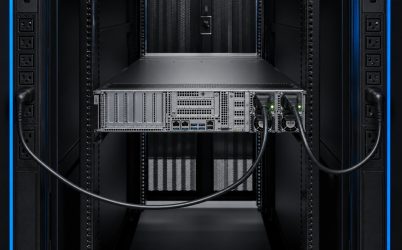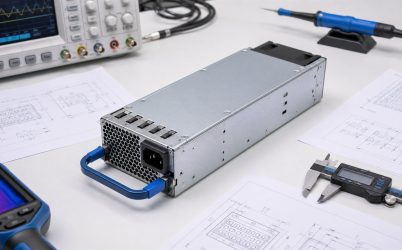
An 80 Plus Titanium server power supply represents the highest named efficiency tier in the widely used 80 PLUS program and, in applicable categories, adds a low-load efficiency requirement that is especially relevant to redundant server operation. It can reduce conversion loss across a broad operating range, but the badge alone cannot show whether the energy savings justify the price or whether the module will work in a particular server. The decision must connect certified efficiency data with workload distribution, input voltage, redundancy mode, thermal design, mechanical and electrical compatibility, and expected service life.
Quick answer: Titanium is most valuable when the load profile uses its wider efficiency advantage
Confirm the exact module’s certificate and test category, then model input energy across real DC-load bins rather than comparing only peak percentages. Include the per-module load created by 1+1 sharing or any supported standby strategy. Assign value to reduced electrical loss and cooling only under documented assumptions. Before purchase, separately verify chassis fit, connector and pinout, output and standby rails, PMBus and BMC behavior, airflow, derating, hot swap, and surviving-module capacity. Titanium can be compelling in continuously operated, lightly to moderately loaded redundant fleets, but it is not automatically the lowest-cost or most compatible choice.
The distinguishing low-load test point matters in redundant systems
Efficiency typically falls at light load because fixed control, bias, switching, and fan consumption becomes large relative to useful output. Titanium certification addresses a lower load point in relevant program categories in addition to the other standardized points. This feature aligns with a common server condition: two active supplies share the system load, so each module operates at a lower fraction of its individual rating.
That does not mean every redundant server spends most of its time at the same percentage. PSU capacity, server utilization, current-share strategy, power-management firmware, and accelerator workload all change the distribution. A 2,000 W pair feeding a steady 600 W system behaves differently from the same pair feeding a GPU server that cycles between moderate and very high load. Use telemetry or representative measurements whenever possible.
Compare certified categories correctly
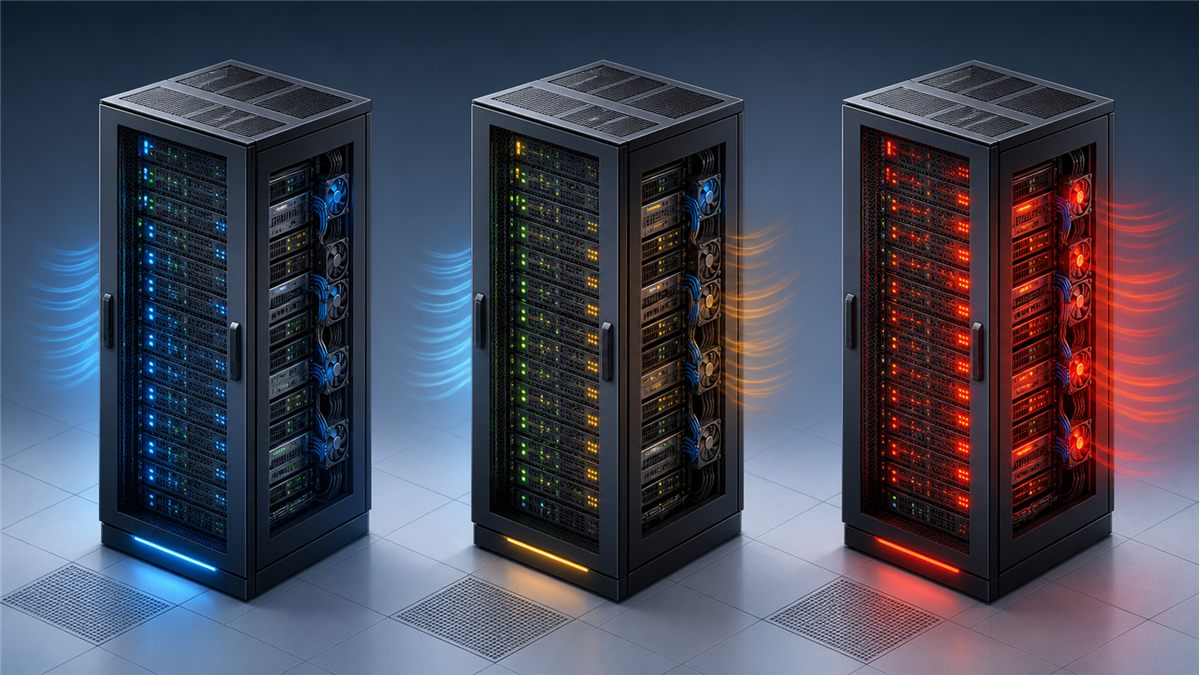
80 PLUS publishes different criteria for different voltage and equipment categories. Buyers should avoid quoting one generic Titanium threshold without naming the category and input condition. Open the official certification record, confirm the exact model, and note the measured points. If the proposed unit is a variant, obtain evidence that the certification applies to that variant rather than relying on a family resemblance.
Certification tests are valuable because they provide a standardized comparison. They are not a complete reproduction of a data center. Production servers experience variable inlet temperature, changing fan speed, dynamic load, component aging, and management overhead. The certificate is the beginning of a performance review, while the datasheet curve and system measurements complete it.
Model annual energy with load bins
Create a table of representative DC outputs and annual hours. For each bin, divide DC output by efficiency to estimate AC input. Subtract output to calculate PSU loss, then multiply by time. In an active 1+1 system, calculate each module at its share of the load. If the platform supports a different power-management state, model that state separately and include transitions between modes.
Consider a hypothetical 1,000 W DC load. At 95 percent efficiency, estimated input is about 1,053 W and conversion loss is about 53 W. At 93 percent, input is about 1,075 W and loss is about 75 W. The difference is approximately 22 W during that interval. These figures illustrate the method only; actual values must come from the candidate units at the applicable input and load.
Energy price, operating hours, and fleet size then translate the difference into cost. Avoid presenting a payback period without stating those assumptions. A sensitivity range for utilization and electricity price is more useful than a single precise-looking forecast.
Reduced loss influences rack and cooling design
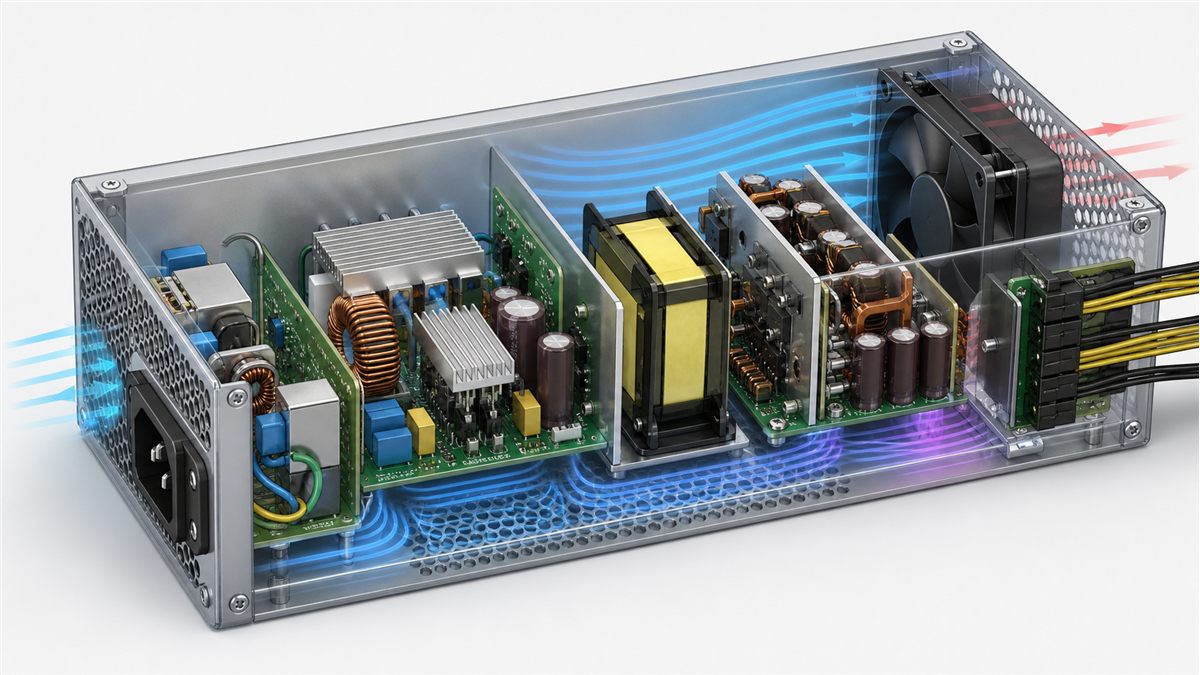
Conversion loss becomes heat near the rear of the server. Lower loss can reduce PSU exhaust temperature and the cooling work associated with that heat. Across a large fleet, even modest per-server differences may affect electrical and cooling capacity planning. In a single lightly used server, the operational impact may be small.
Efficiency tier does not define fan acoustics or internal component temperature. Airflow impedance, fan control, heat-sink design, inlet restriction, and the surrounding chassis determine the result. A high-efficiency module can still run hot if airflow is obstructed. Review the thermal and acoustic data, including derating at maximum inlet temperature and altitude, then test in the intended chassis.
Power factor and facility current remain separate considerations
Efficiency describes real output power relative to real input power. Power factor describes how input current relates to voltage and real power. Modern server supplies commonly include power-factor correction, but the exact performance should be taken from documentation. Facility designers need both values, along with harmonic and inrush information, to evaluate branch circuits, generators, UPS systems, and PDUs.
Input voltage can change available output, current, and efficiency. Some high-power server PSUs deliver their maximum rating only over a higher-voltage portion of the input range. Confirm full-power conditions, cord and inlet ratings, PDU compatibility, and low-line derating. A Titanium label does not override those constraints.
Compatibility is still a model-specific engineering task
CRPS and other server modules may look standardized while differing in depth, latch, keying, connector, rail voltage, standby power, sense contacts, management interface, firmware identity, and airflow direction. The candidate must match the exact host and PDB. Never infer pinout or hot-swap support from the enclosure alone.
- Compare the mechanical drawing with the PSU bay and extraction clearance.
- Verify every high-current, return, standby, sense, control, and communication contact.
- Confirm current sharing and output isolation in normal and fault states.
- Check BMC acceptance, PMBus command support, telemetry scaling, and alarms.
- Validate airflow direction, fan behavior, input range, and thermal derating.
Powernexu’s CRPS compatibility guide explains these checks in detail. Titanium should be one row in the compatibility matrix, not the criterion that replaces it.
Platinum versus Titanium is a workload decision
Titanium generally sets a more demanding efficiency objective and covers low load more explicitly in applicable categories. Platinum equipment may cost less and can still provide strong efficiency. The practical difference comes from the candidates’ measured curves at the site’s input and from the hours the workload spends in each region. There is no universal winner independent of operating conditions.
Titanium tends to deserve closer consideration when servers operate continuously, redundant modules remain lightly loaded for long periods, energy or cooling capacity is constrained, rack density is high, or a large fleet amplifies small losses. Platinum may provide a better total-cost result for short-lived installations, intermittently used systems, or cases where the measured energy difference is small. Availability, lead time, validated platform support, and replacement standardization can outweigh a narrow efficiency advantage.
Redundancy requires capacity after a module is lost
In 1+1 service, either module must carry the full permitted server load under the actual input and thermal conditions. During normal sharing, each may operate in a favorable efficiency region; during a failure, the remaining unit moves to a higher load point and its fan may speed up. Verify output capacity, transient headroom, connector and PDB current, and temperature in this degraded state.
Hot swap adds further requirements. The PDB and PSU must isolate faults, sequence contacts, control inrush, and maintain the shared bus during removal and insertion. Management software should signal loss of redundancy promptly. Efficiency certification does not test the complete server’s failover or service procedure.
Protection, telemetry, and firmware affect operations
Operations teams use PSU telemetry for input power, output power, temperature, fan speed, status, and faults when those functions are supported. Accuracy, update rate, command set, addressing, and BMC integration are model-specific. Data should be compared with external measurements during qualification before it is used for billing, capacity automation, or fault diagnosis.
Protection functions require the same scrutiny. Review overvoltage, overcurrent, short-circuit, overtemperature, fan-fault, and input-fault responses, including recovery. In a shared output, the failed unit must be isolated without dragging down the healthy path. Test alarms and event logs for each defined failure mode.
Procurement and qualification workflow
- Confirm the exact certified model, category, input condition, and certification report.
- Collect the complete efficiency curve and load profile for the planned server.
- Calculate energy and loss across load bins for normal and degraded redundancy.
- Verify mechanical, connector, pinout, PDB, management, and airflow compatibility.
- Review full-power input range, thermal derating, protection, and service procedure.
- Test startup, dynamic workloads, maximum sustained load, module removal, and reinsertion.
- Measure input, output, temperature, acoustics if relevant, telemetry, and fault reporting.
- Compare lifetime cost with transparent assumptions and sensitivity ranges.
This workflow distinguishes a technically and economically justified Titanium deployment from a purchase based only on a tier name. The broader data center server power supply planning guide can help relate module efficiency to rack feeds, cooling, and redundancy.
Questions about Titanium server supplies
Does Titanium always save enough energy to repay its price premium?
No. Savings depend on the actual difference between candidates, load distribution, input voltage, operating hours, electricity price, cooling assumptions, and service period. Calculate with measured or published curves and state the uncertainty.
Is Titanium necessary for a high-power GPU server?
It can reduce conversion loss, but GPU-server suitability also depends on transient response, output capacity, connector and PDB distribution, input voltage, cooling, telemetry, and redundancy. A certified tier alone does not establish support for a GPU platform.
Why can a high-rated redundant module still operate at low load?
Capacity is often selected so either module can carry the system after a failure. With both modules active and sharing, each sees only part of the normal load. Provisioning margin and variable workload can reduce that fraction further.
Can Titanium and Platinum modules be mixed in one server?
Only if the system manufacturer explicitly supports the exact pair and their electrical, sharing, firmware, and management behavior. Matching voltage and physical size is insufficient. Mixed modules can share unevenly or trigger host faults.